Keepers of the Unwritten: The Grassroots Archivists Saving Central American Stories from Erasure
There's a particular kind of loss that doesn't announce itself. It doesn't come with a fire or a flood. It happens slowly, in the space between a grandparent's last breath and the moment a grandchild realizes they never asked the right questions. For Central American communities — on the isthmus and scattered across the US — that loss has been compounding for generations. Wars, displacement, migration, and a global media culture that rarely looks south of Mexico have left enormous gaps in the historical record. But a loose, determined network of archivists, oral historians, and community librarians is pushing back, one story at a time.
The Archive That Lives in a Spare Bedroom
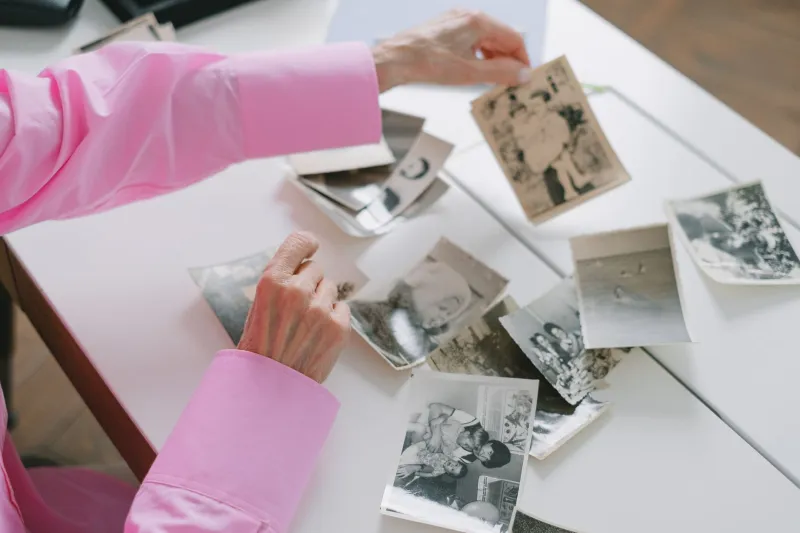
In a suburb outside of Washington, D.C. — a metro area with one of the largest Salvadoran populations in the country — a retired schoolteacher named Estela Fuentes has turned her spare bedroom into what she half-jokingly calls "the most important library nobody's ever heard of." Cardboard boxes line the walls. A flatbed scanner hums on a folding table. Fuentes has spent the last eleven years collecting photographs, letters, land deeds, and handwritten recipes from Salvadoran families across the DMV, digitizing everything she can get her hands on.
"People bring me things in plastic bags," she says. "A photograph from 1962. A birth certificate written in pencil. A letter someone's grandmother sent from the mountains during the war. They don't know what to do with it, but they know it matters."
What Fuentes is doing informally, others are attempting to systematize. Organizations like the Guatemalan-Maya Center in Lake Worth, Florida, have been working for years to preserve K'iche' and Mam language materials — recordings, textile patterns, ceremonial knowledge — that exist nowhere in any national archive. Their work sits at the intersection of cultural preservation and outright survival: indigenous languages in Guatemala continue to face institutional suppression, and diaspora communities in the US are often the last line of defense.
Why the Textbooks Left Them Out
To understand why grassroots preservation matters so much, you have to understand how thoroughly official history has failed the isthmus. Central American nations spent much of the 20th century under authoritarian regimes that had little interest in documenting the lives of rural, indigenous, or poor communities — and every interest in controlling the narrative. In El Salvador, Guatemala, and Nicaragua, entire eras of history were either distorted or deliberately destroyed. Archives were burned. Community leaders were disappeared. And when survivors fled north, they often left with nothing but memory.
US history curricula haven't exactly filled the void. Ask most American high schoolers about the Guatemalan coup of 1954 or the role of US foreign policy in Central American civil conflicts, and you'll get blank stares. The stories of the people most affected by those events — the farmers, the weavers, the village teachers — have been doubly erased: once by the regimes that targeted them, and again by a global culture that never considered their experiences worth recording.
That erasure has real consequences for diaspora communities today. Second- and third-generation Central Americans in the US often describe a specific kind of identity vertigo: knowing they come from somewhere significant but having almost no detailed cultural material to anchor that knowledge. "I knew I was Honduran," says Marco Zelaya, a 28-year-old graphic designer in Chicago whose family is from the Garífuna coast. "But I didn't know what that really meant until I started finding recordings of Garífuna punta music from the 1970s online. Someone had uploaded them from a cassette tape. That cassette tape changed my life."
Digitizing the Irreplaceable
The cassette tape Marco found didn't come from a university. It came from a project run by a Garífuna cultural association in the Bronx that has been quietly digitizing audio recordings, oral histories, and ceremonial songs for over a decade. They're part of a broader wave of community-driven digital preservation happening across the isthmus diaspora — efforts that are increasingly sophisticated, even if they remain severely underfunded.
In Honduras itself, a collective of young archivists called Memoria Viva has been traveling to rural communities with portable recording equipment, documenting the stories of elders before those stories disappear entirely. They've recorded over 400 oral histories in the last five years, covering everything from traditional agricultural practices to firsthand accounts of political violence. The recordings are stored on multiple servers and shared freely with diaspora communities in the US who request access.
"We're not waiting for the government to care about this," says one of the project's coordinators, speaking by video call from Tegucigalpa. "We're not waiting for a university grant. We're doing it because if we don't do it now, it's gone."
The Bridge Between There and Here
What makes these preservation efforts especially resonant is how directly they serve communities living in the in-between — people who are neither fully "from" the isthmus nor fully absorbed into American mainstream culture. For diaspora families, access to detailed, authentic cultural material isn't just a matter of nostalgia. It's a form of legitimacy. It's proof that the places they come from have depth, complexity, and beauty that the world hasn't bothered to acknowledge.
Librarians and cultural workers in cities like Los Angeles, Houston, and New York are increasingly partnering with isthmus-based archivists to make this material accessible to US communities. Some public libraries in heavily Central American neighborhoods have begun hosting oral history workshops where community members can record their own stories using professional equipment. Others are building digital collections specifically around Central American cultural material — cookbooks, textile guides, folk medicine knowledge — that simply don't exist in mainstream library systems.
The work is slow and underfunded and often invisible. Estela Fuentes still scans documents on a folding table. Memoria Viva still runs on shoestring donations. But the urgency driving these efforts is only growing, especially as the generation with direct memory of pre-war Central America gets older.
What Gets Lost, What Gets Saved
There's a word in Spanish — rescatar — that means to rescue or reclaim. It's the word people in this movement use most often when they talk about what they're doing. Not preserving, not archiving. Rescuing. The framing matters. It implies something is actively at risk, that time is running out, that the act of documentation is itself a form of resistance.
For Central American communities on both sides of the water, that resistance is also a form of connection. Every digitized photograph, every recorded story, every scanned land deed is a thread pulled taut between the isthmus and the diaspora — a reminder that the bridge runs both ways, and that what gets carried across it can be more than just remittances and nostalgia. It can be the actual substance of a culture, saved from the silence that almost swallowed it whole.