Neither Here Nor There (And That's Exactly the Point): The Border-Zone Creatives Inventing a New American Identity

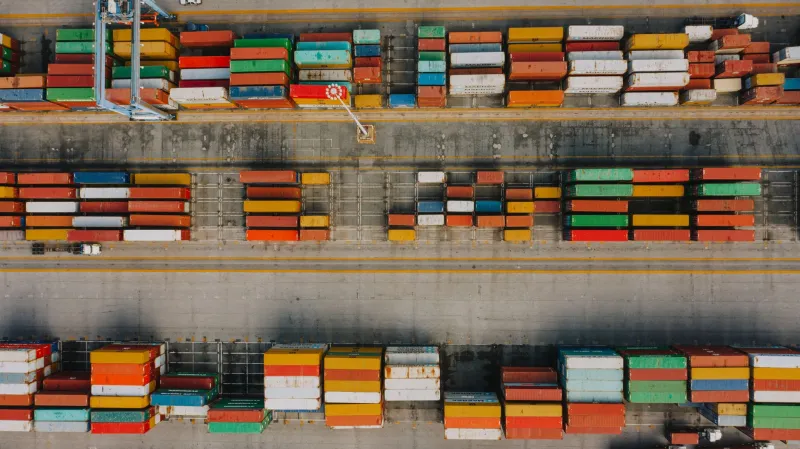
Photo by Photo by Sandisk on Unsplash on Unsplash
Somewhere between El Paso and Ciudad Juárez, between a TikTok comment section in English and a WhatsApp family thread in Spanish, between a thrift-flipped vintage denim jacket and a hand-embroidered huipil, a new kind of American is building their career. They didn't choose to grow up in the margins. But they've decided the margins are where the money is.
Call it liminal commerce. Call it hyphenated hustle. Whatever you call it, a generation of young creators raised in America's geographic and cultural in-between spaces are turning their complicated identities into brands — and those brands are resonating far beyond the border communities that made them.
Growing Up in the Threshold
The concept of an isthmus — a narrow strip of land connecting two larger bodies — is a useful metaphor for how a lot of these young people describe their own lives. They are the connective tissue between cultures, the narrow passage through which languages, aesthetics, and traditions flow in both directions.
Take Sofia Mendez-Krause, 24, who grew up in Laredo, Texas, in a household with a Mexican-American mother and a German-American father. She's been making content about her life since she was 17, and today runs a newsletter, a Substack, and a growing presence on Instagram and TikTok where she documents what she calls "the beautiful confusion" of existing between multiple cultural worlds.
"People kept asking me, what are you? And I kept trying to give them a clean answer," she says. "At some point I realized the question itself was the content. The confusion was interesting. The in-between was interesting. And once I stopped apologizing for it, my audience grew."
Her most viral post — a video comparing the experience of code-switching between English, Spanish, and what she calls "Laredo English" (a fluid Tex-Mex vernacular that doesn't fit neat linguistic categories) — has been viewed over 2.3 million times. The comments are full of people from border communities across the US who recognized themselves in it immediately.
The Algorithm Loves Complexity (When You Frame It Right)
Here's something that would have surprised marketers even ten years ago: hybridity is a competitive advantage online. The creator economy rewards specificity and authenticity, and few things are more specific — or more authentic — than having grown up navigating multiple cultural systems simultaneously.
Jordan Tec, 27, grew up in a Salvadoran-American family in the Adams Morgan neighborhood of Washington, D.C., a community that sits at the intersection of Latin American immigration history and Black American cultural influence. He's built a following of over 180,000 on YouTube with a channel that covers food, fashion, and urban history through what he describes as a "corridor lens" — always asking how things moved from one place to another, and what changed in the crossing.
"My neighborhood is literally a bridge," he says. "Salvadoran pupuserías next to Ethiopian restaurants next to Howard University. That's not a random mix — that's geography and history doing its thing. I just point the camera at it."
His most-watched series documents the "migration" of specific foods and fashion items from Central America through D.C.'s immigrant communities and into mainstream American culture. It's part food history, part urban anthropology, part personal memoir — and it's attracted sponsorships from food brands, clothing companies, and cultural institutions that see in his audience a demographic they've struggled to reach through traditional advertising.
Fashion at the Fold
If there's a single creative field where border-zone identity is exploding right now, it might be fashion. A growing cohort of young designers is working explicitly at the intersection of traditional garment-making from Latin American and Caribbean cultures and contemporary American streetwear aesthetics — and the results are getting serious attention.
Miranda Osei-Bonsu, 22, is the daughter of a Ghanaian father and a Panamanian mother who met while her father was working near the Canal Zone. She grew up in Miami and now studies fashion design while running a small label called Estrechos (the Spanish word for straits or narrows) that produces limited-edition pieces blending West African textile traditions with Central American embroidery techniques and American sportswear silhouettes.
"Every piece I make is a map," she says simply. "It has coordinates in it even if you can't see them."
Her work has been featured in several independent fashion publications, and she recently received a grant from a Miami arts foundation specifically for work that represents Afro-Latin diaspora aesthetics. The label is small — she produces maybe 200 pieces a season — but her waiting list is three times that. "People are hungry for things that look like their actual lives," she says. "Not one culture's version of beautiful. The whole complicated picture."
Language as Raw Material
One of the most interesting innovations coming out of border-zone communities isn't visual or sonic — it's linguistic. Young people who grew up speaking multiple languages, or the hybrid vernaculars that emerge in bilingual communities, are increasingly treating that linguistic flexibility as a creative tool rather than a social liability.
Spanglish has existed for generations, but what's different now is the intentionality. Writers, podcasters, and social media creators are making deliberate choices about when to switch languages, when to let a phrase stay untranslated, when to let the gap between languages do the emotional work. It's a technique that requires a bilingual audience to fully appreciate — and in 2024, that audience is enormous and growing.
"I write in Spanglish on purpose," says Ernesto Villalobos-Park, a 26-year-old writer and podcaster from San Diego whose work explores Korean-Mexican identity (his mother is from Oaxaca, his father from Seoul, and he grew up in a neighborhood shaped by both communities). "Not because I can't choose, but because choosing would be a lie. The switching is the meaning."
His podcast, which explores what he calls "the grammar of hybrid identity," has found listeners not just in border communities but among second-generation immigrants of all backgrounds across the US who recognize the experience of living between languages.
The Marketplace of In-Between
What all of these creators share is an understanding that their position at the cultural threshold — uncomfortable as it can sometimes be — is also a vantage point. They can see both sides. They can translate, not just linguistically but aesthetically, emotionally, commercially.
And American culture, which has always been most vital when it's absorbing and transforming influences from its margins, is paying attention. Brands are hiring border-zone creatives as consultants. Media companies are building verticals specifically aimed at hyphenated American audiences. Academic institutions are starting to study the creative output of liminal communities with the same seriousness they once reserved for more legible cultural movements.
The isthmus, it turns out, is not a narrow strip of land at the edge of the map. It's the center of something — a place where the interesting work happens because it has to, because there's no other choice, because the pressure of existing between two worlds creates something that neither world alone could produce.
Sofia Mendez-Krause puts it best: "I used to wish I was simpler. Now I charge for the complexity."
Same, honestly.