The Zone That Built the Sound: Panama's Forgotten Influence on American Music and Style
Most people think of the Panama Canal as an engineering story. Locks, ships, billions of tons of cargo moving between oceans. But tucked inside that geopolitical footnote is a cultural story that almost nobody tells — one involving jazz clubs, calypso rhythms, zoot suits, and the slow, steady migration of a sound that would eventually fill arenas from Miami to Los Angeles.
The Canal Zone, that ten-mile-wide strip of land the United States controlled from 1903 to 1999, was never just a construction project. It was an experiment in forced proximity. Thousands of Black West Indian workers — Jamaicans, Barbadians, Trinidadians — were brought in alongside American engineers, Panamanian laborers, and a rotating cast of military families. What happened when all those cultures collided in a strip of jungle smaller than Rhode Island? Something genuinely new.
A Stage Between Two Worlds
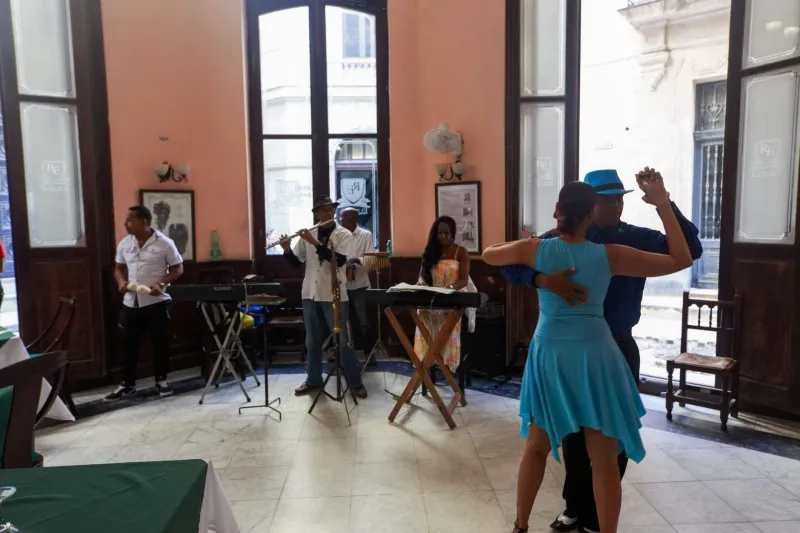
The Zone had its own radio stations, its own movie theaters, its own commissaries. And it had music — everywhere, all the time. American servicemen brought big band jazz and early rock and roll south. West Indian workers brought calypso, mento, and the rhythmic sensibility of the Caribbean. Panamanians brought their own African and Spanish-inflected traditions into the mix. The result was a scene that felt like New Orleans and Kingston had a baby and raised it in the tropics.
Some of the most underappreciated figures in American musical history passed through or were born in the Zone. Rubén Blades, the Panamanian salsa legend who later became a Hollywood actor and his country's Minister of Tourism, grew up watching American culture filter through Panama City's neighborhoods just outside the Zone's borders. He absorbed it, remixed it, and sent it back north with a political edge that American audiences weren't entirely ready for — but eventually loved.
Ruby Braff, jazz trumpeter and frequent collaborator with mainstream American acts, was among many musicians who cited the Canal Zone's cross-cultural jam sessions as formative. The Zone's clubs didn't enforce the same racial segregation that defined entertainment venues in the American South during the same era, which meant musicians who couldn't share a stage in Georgia were freely trading licks in Balboa and Cristóbal.
Fashion at the Intersection
It wasn't just music. The Canal Zone was a style laboratory, too. American military fashion — the crisp utility of mid-century US Army and Navy aesthetics — blended with the vivid, tropical sensibility of Caribbean and Latin American dress. The guayabera, that breezy embroidered shirt that's now a staple at Miami weddings and Tex-Mex restaurants across the Southwest, got a significant boost in visibility through the Zone's social scene, where it bridged formal and casual across cultures.
Zoot suit culture, which exploded in 1940s Los Angeles and Harlem, had deep roots in Caribbean immigrant communities — many of whom had family connections to the Canal Zone's West Indian labor diaspora. The oversized silhouette, the bold colors, the performative swagger of it all — these were partly expressions of an identity forged between worlds, a visual language developed by people who belonged fully to neither the country they'd left nor the one they'd arrived in.
That in-between aesthetic never really went away. It evolved. The baggy, layered style of early 2000s reggaeton videos owes something to that same tradition of dressing loudly as an act of cultural assertion.
Reggaeton's Hidden Bridge
Speak of reggaeton and you'll hear Puerto Rico's name almost immediately — and fairly so. But the genre's DNA runs through Panama. El General, born Edgardo Franco in Panama City, was recording reggaeton-adjacent tracks in the late 1980s, years before Daddy Yankee was a household name. His music traveled north through Caribbean diaspora networks, many of which had nodes in Canal Zone communities.
The Zone's West Indian population had maintained strong ties to Jamaica and Trinidad for generations. When Jamaican dancehall began its global expansion in the 1980s, it moved through those networks naturally, picking up Spanish lyrics and tropical production flourishes along the way. By the time reggaeton cracked American mainstream radio in the mid-2000s, it had already traveled a route that ran directly through that narrow strip of Central American land.
The Zonians Who Came North
When the Zone was handed back to Panama in 1999, tens of thousands of American families — called Zonians — relocated to the US. They settled heavily in Florida, Texas, and the Gulf Coast states, bringing with them a cultural fluency that most Americans didn't have a category for. They spoke Spanish, had Caribbean friends, ate patacones and arroz con pollo alongside hamburgers, and listened to music that didn't fit neatly into any American radio format.
Many of their kids became the cultural translators of their generation — DJs, producers, designers, and entrepreneurs who understood intuitively how to move between American mainstream culture and Latin American sensibility. Some of them are still doing it, though few trace the origin story back to a decommissioned military installation in Central America.
Why This History Gets Lost
Part of the reason the Canal Zone's cultural legacy stays buried is that it complicates the stories we prefer to tell. American music history likes clean origin points — New Orleans for jazz, Memphis for blues, New York for hip-hop. The Canal Zone's contributions were diffuse, traveling through diaspora networks and immigrant communities rather than landing on a single stage or in a single city.
And the Zone itself occupies an uncomfortable place in American memory. It was a colonial project, full stop. The US controlled that land through a treaty that Panamanians widely considered illegitimate, and the labor system that built the canal was explicitly exploitative and racially stratified. Celebrating the cultural output of that environment without reckoning with its politics would be a disservice to the people who actually created it.
But erasing the history entirely doesn't serve anyone either. The musicians and workers and families who lived in that narrow strip of land made something real and lasting. It moved through the world, changed the way people danced and dressed and heard music, and eventually helped build the multicultural American mainstream we live in today.
That's worth knowing. Even if — especially if — the story is more complicated than a simple celebration.