Pressure Makes Diamonds: How Central America's Climate Crisis Is Forging the World's Next Big Water Tech
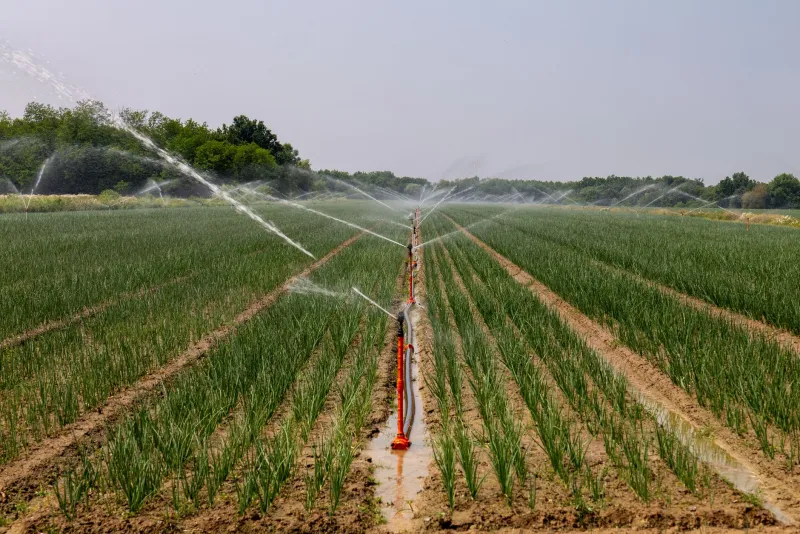
There's a certain irony to being a narrow strip of land wedged between the Pacific and the Atlantic and still struggling to find clean water. But that's the reality for millions of people across Central America, where seasonal droughts are getting longer, aquifers are being drained faster than they can recharge, and rural communities are caught in an exhausting cycle of too much rain followed by not nearly enough. Geography, for all its drama here, doesn't automatically mean abundance.
What it does mean, increasingly, is ingenuity.
Across Guatemala, Honduras, Nicaragua, and Panama, a generation of engineers, farmers, and founders is responding to climate pressure not with resignation but with an almost stubborn creativity. And the rest of the world — including a growing cluster of US-based venture funds — is starting to pay attention.
When the Land Itself Becomes the Lab
The isthmus has always been defined by its constraints. Narrow. Mountainous. Ecologically complex. Those same qualities that made it a strategic chokepoint for global trade for centuries are now making it something else: a real-world stress test for climate adaptation technology.
Dr. Alejandra Montes, a hydrologist based in Tegucigalpa, puts it plainly. "We don't have the luxury of waiting for a crisis," she says. "The crisis is already here. So we innovate or we collapse."
Montes leads a small research collective that has spent the last four years developing low-cost atmospheric water generation units — essentially devices that pull moisture directly from the air and convert it into potable water. The technology itself isn't new; versions of it have existed in labs in the US and Israel for years. But Montes and her team have done something those labs hadn't fully cracked: they've made the units cheap enough, durable enough, and simple enough to maintain that rural Honduran villages with no technical infrastructure can actually use them.
The first 40 units were deployed in the Dry Corridor — a stretch of Central America that has become one of the most climate-vulnerable zones in the Western Hemisphere — and the results were striking enough that a water-access nonprofit out of California showed up with a check and a lot of questions.
Drought-Resistant Farming Gets a Central American Makeover
It's not just water collection that's getting reinvented. Agriculture, which employs a huge portion of the rural population across the region, is being quietly transformed by a wave of agri-tech startups that are blending ancestral knowledge with modern data science.
In Guatemala's western highlands, a company called Semilla Viva is working with Indigenous Mayan farming communities to develop seed varieties that can withstand both extended dry spells and the sudden heavy rains that increasingly follow them. Their approach isn't purely lab-driven — it involves deep collaboration with community elders who have been selectively cultivating drought-resistant crops for generations, long before the term "climate adaptation" existed in any policy document.
What makes Semilla Viva interesting to outsiders isn't just the seeds. It's the data layer they've built on top of the traditional knowledge: soil sensors, satellite imagery, and a mobile app that helps smallholder farmers make planting decisions based on hyperlocal climate forecasts. The company just closed a seed round (yes, pun intended) that included participation from an Austin-based impact fund and a Bay Area family office with deep roots in agricultural technology.
"Central America is a proving ground," says Marco Tulio Barrios, Semilla Viva's co-founder, speaking from a demo plot outside Quetzaltenango. "If it works here, in these conditions, it works anywhere."
The Renewable Energy Angle Nobody's Talking About
Water and agriculture are the obvious pressure points, but climate tech on the isthmus goes further. Several startups are tackling the energy side of the equation, recognizing that water scarcity and energy poverty are often two sides of the same coin.
Nicaragua, despite its political complications, has become a surprising leader in geothermal energy development — a natural fit given the country's volcanic geography. A newer generation of engineers, some of them trained in the US and then returned home, are working on micro-geothermal systems that can power individual rural communities without needing to connect to a national grid that doesn't reliably reach them anyway.
In Panama, meanwhile, a startup called Corriente Limpia is piloting tidal energy capture technology in the country's Pacific coastal communities. The idea is straightforward: the same ocean currents that made Panama's geography historically significant can now power the homes and water treatment facilities of the people who live alongside them. Early pilots are modest, but the underlying IP is attracting interest from energy firms in Miami and Houston who see scalability potential far beyond Central America's shores.
US Investors Are Quietly Showing Up
For a long time, climate tech investment in Latin America was an afterthought — a line item in an impact portfolio rather than a serious strategic bet. That's changing, and the shift is more pronounced than most people realize.
Several US-based climate funds, including at least two that have made names for themselves backing early-stage clean energy companies in sub-Saharan Africa and Southeast Asia, have quietly begun scoping deals in Central America. The pitch they're hearing from local founders is compelling: lower valuations than comparable companies in more saturated markets, real-world deployment data in extreme conditions, and a regulatory environment that — while imperfect — is increasingly motivated to support climate solutions by international development pressure.
"There's a maturity happening," says one Miami-based venture partner who asked not to be named because the fund hasn't publicly announced its regional focus. "These founders aren't pitching ideas. They're pitching things that are already working in the field."
Diaspora networks are part of the story too. Central American professionals living in cities like Los Angeles, Houston, and New York are increasingly acting as connective tissue — introducing founders back home to investors, accelerators, and corporate partners who would otherwise never find each other. It's informal, relationship-driven, and deeply effective.
The Bigger Picture
What's happening on the isthmus isn't just a feel-good story about resilience. It's a preview of what resource-constrained innovation looks like when it's done right — when the people closest to the problem are the ones building the solution.
For US audiences thinking about where the next wave of climate technology is going to come from, the answer might be less Silicon Valley and more the narrow strip of land most Americans only think about when they're booking a Panama Canal cruise.
The constraints are real. The stakes are high. And the innovations being forged under that pressure? They're starting to travel.
Some diamonds, it turns out, are being cut a lot closer to the equator than we expected.