Living on the Edge: Why Remote Workers Are Ditching Austin for Central America's Border Towns
There's a running joke among a certain set of remote workers: the best Wi-Fi you'll ever find is in a place you'd never expect. Turns out, that joke is becoming something closer to a business model — and Central America's border cities are the punchline nobody saw coming.
While the usual suspects — Medellín, Mexico City, Lisbon — still dominate the digital nomad conversation, a quieter migration is happening in the narrow strip of land connecting North and South America. Remote workers, many of them burned out on overpriced US metros and oversaturated co-working scenes, are landing in towns like La Mesilla, El Amatillo, and the expanding commercial corridors around Peñas Blancas. These aren't tourist spots. They're crossroads. And that's exactly the point.
The Geography Is the Feature, Not the Bug
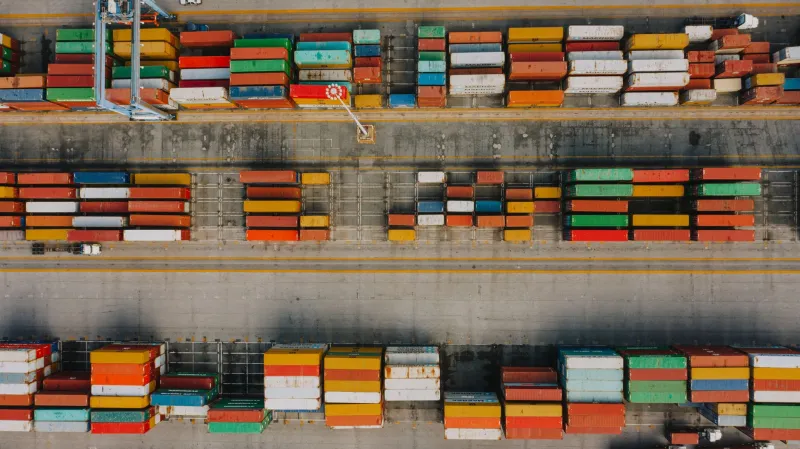
Isthmus geography has always been about movement — goods, people, ideas passing through a bottleneck between two massive landmasses. For centuries, that positioning meant Central American border zones were defined by transit. Now, for the first time, people are actually stopping.
Remote workers are discovering what locals have always known: border towns sit at the intersection of multiple economies simultaneously. You're close enough to major Central American capitals to access urban infrastructure — hospitals, airports, reliable internet backbone — but far enough removed to live on a fraction of the cost. A comfortable apartment that would run $2,800 a month in Denver might go for $450 here. A plate of food that costs $18 in a trendy Brooklyn spot is $4 at the comedor down the street, and it's better.
But it's more than just arbitrage. These towns, shaped by decades of cross-border commerce, tend to have a pragmatic, hustle-forward energy that remote workers find surprisingly familiar. Entrepreneurship isn't a Silicon Valley lifestyle brand here — it's survival, and it's been going on for generations.
Connectivity Is Catching Up Fast
The honest knock on Central America as a remote work destination has historically been infrastructure — spotty internet, unreliable power, the kind of connectivity issues that turn a Zoom call into a slideshow. That story is getting complicated.
Investment in fiber optic infrastructure across Guatemala, Honduras, and Costa Rica has accelerated sharply over the past five years. Starlink's expansion into rural Central America has been a genuine game-changer, reaching places that cable companies never bothered with. Co-working spaces — some scrappy, some surprisingly polished — have started appearing in towns that didn't have a single espresso machine a decade ago.
In Tecún Umán, Guatemala's border city facing Mexico across the Suchiate River, a handful of local entrepreneurs have converted old commercial spaces into hybrid work-and-stay setups targeting exactly this demographic. They're not marketing to backpackers. They're marketing to the 32-year-old UX designer in Chicago who's tired of paying $2,100 a month for a studio apartment and wants a change that doesn't require learning a whole new continent.
What This Means for the People Who Actually Live There
Here's where the story gets complicated, and Istmo isn't going to pretend otherwise.
The arrival of remote workers with US dollar incomes into communities where locals earn in local currency creates real economic pressure. Rent creeps up. The comedor that's been feeding the same neighborhood for 30 years suddenly has to compete with a specialty coffee shop catering to people who work in a different time zone. The cultural texture that made the place interesting to outsiders in the first place starts to fray at the edges.
This isn't a hypothetical — it's a pattern that's already played out in Oaxaca, in parts of Medellín, in Playa del Carmen. The question isn't whether gentrification pressure follows remote worker influx. It does. The question is whether border communities, with their already-complex economic ecosystems, have more tools to manage it than a typical tourist town.
Some local advocates think the answer might actually be yes. Border economies are used to absorbing and adapting to external economic forces — that's been their function for as long as they've existed. Community organizations in several of these towns are already pushing for policies that tie remote worker residency permits to local economic contribution requirements: hiring local employees, sourcing from local vendors, contributing to community development funds.
It's early. The policy infrastructure isn't there yet. But the conversation is happening, and that matters.
The Cultural Exchange No One's Quite Naming Yet
Something else is happening in these border towns that doesn't fit neatly into either the utopian or dystopian narrative about remote work migration.
The people moving through these spaces — and increasingly, staying — are often members of the Central American diaspora in the US, returning not to their family's hometown exactly, but to the region, on their own terms. They carry both the economic leverage of dollar-denominated incomes and a cultural fluency that the stereotypical digital nomad doesn't have. They're not arriving as outsiders. They're arriving as something harder to categorize.
That creates a different kind of exchange. A Guatemalan-American product manager working remotely for a Seattle startup, spending six months a year in a border town near Quetzaltenango, isn't just a consumer of local culture — they're a participant in it, often in ways that complicate easy narratives about who belongs where and why.
Their presence is also reshaping what "return migration" looks like. Rather than the binary of leaving or staying, there's an emerging third option: circulating. Living between, in the literal geographic sense, on the isthmus that has always been about connection.
The Practical Reality for Anyone Thinking About It
If you're a remote worker reading this and the idea is starting to form — good. But go in with clear eyes.
Internet speeds vary wildly even within a single town. Power outages are real. Healthcare access, while improving, still requires planning. Language fluency matters more than you think, not because people won't speak English, but because the depth of your experience will be directly proportional to your ability to communicate beyond tourist-level Spanish.
The towns best positioned for this moment tend to be secondary cities near borders rather than the border crossing points themselves, which can be chaotic and not exactly optimized for someone trying to meet a product deadline. Look for places with a growing local professional class, existing small business infrastructure, and — this one's underrated — a municipal government that's at least paying attention to the conversation about remote work and its implications.
Costa Rica's border regions with Panama, the corridor between Guatemala and Honduras near Esquipulas, and the growing commercial zone around the Nicaragua-Costa Rica crossing are all worth watching.
The Isthmus Has Always Been a Connector
The deeper truth here is that what's happening in these border towns isn't entirely new — it's the latest iteration of something the isthmus has been doing for millennia. This narrow strip of land has always been where different worlds meet, where things get exchanged, where something new gets made out of the encounter.
Remote work is just the newest thing passing through. The question — as it's always been — is who gets to shape what it leaves behind.