Two Flags, One Life: The Young Central American-Americans Turning Dual Citizenship Into a Superpower
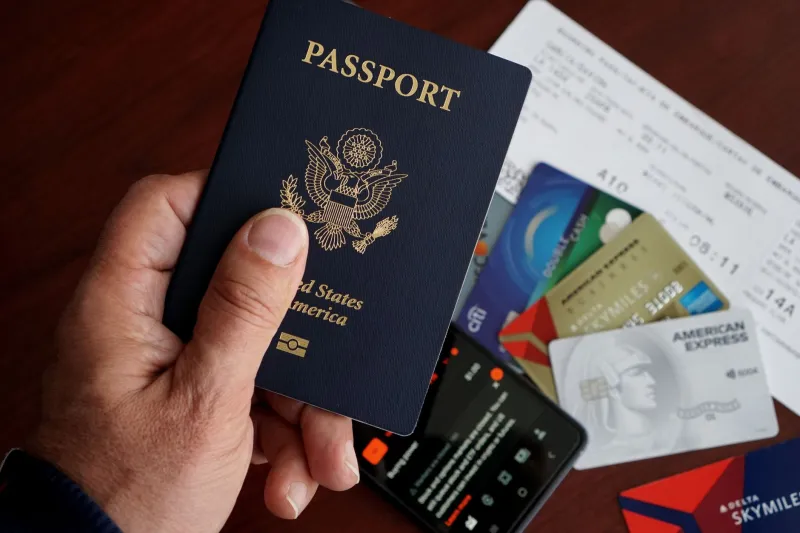
Mariela Fuentes keeps two passports in her apartment in Silver Spring, Maryland. One is navy blue with a gold eagle. The other is deep blue with a quetzal. She's 26, works in international development, and has spent her entire adult life learning how to move fluidly between the two identities those documents represent — Guatemalan by birth and ancestry, American by upbringing and citizenship.
"People always want you to pick a side," she says. "But I've stopped doing that. Both of these are real. Both of these are mine."
Mariela is part of a growing cohort that researchers and community organizers are starting to call the Dual Passport Generation — young people of Central American descent, born or raised in the US, who are now actively claiming citizenship in their families' home countries as those nations loosen their dual-nationality laws. Guatemala, Honduras, El Salvador, Nicaragua, and Belize have all made moves in recent years to either formalize or expand pathways for diaspora members to hold citizenship without renouncing their American status. The result is a generation that's not just straddling a cultural bridge — they're building something permanent on top of it.
More Than a Travel Hack
It would be easy to reduce dual citizenship to a convenience — faster passport lines, easier visa access, the ability to work legally across borders. And sure, those perks are real. But for this generation, the second passport carries a weight that goes far beyond logistics.
For many young Central American-Americans, claiming citizenship in a parent's or grandparent's home country is an act of reclamation. It's a way of saying: this place belongs to me, too, even if I didn't grow up there. In communities where immigration status has historically been a source of anxiety and precarity, having a legal claim to another country feels like a form of security — a backup plan, yes, but also a declaration of identity.
Cesar Mendoza, 29, grew up in Los Angeles in a Salvadoran household. He obtained his Salvadoran citizenship two years ago, partly because he was exploring business opportunities in the region, and partly because of something harder to name.
"My parents came here and gave up so much," he says. "Getting that citizenship felt like honoring that. Like saying their country still matters, that it's still part of who we are."
The Strategic Edge
Beyond the emotional resonance, there's a very real practical architecture being built around dual citizenship in this community. Young Central American-Americans are leveraging their binational status in ways that previous generations couldn't have imagined.
In education, some are using their home-country citizenship to access universities in Central America at domestic tuition rates, then returning to the US with degrees and networks that span hemispheres. In business, dual nationals are setting up companies on both sides of the isthmus, taking advantage of lower operating costs, regional trade agreements, and personal connections that no outside investor could replicate. In tech specifically — a sector where Central America is quietly exploding — diaspora entrepreneurs with dual status are acting as critical connective tissue between Silicon Valley capital and local talent.
And then there's activism. Dual-citizen organizers are showing up in Guatemalan municipal elections, funding Honduran environmental campaigns, and pressuring Salvadoran officials on issues like gang policy and LGBTQ+ rights — all while voting in US midterms and lobbying Congress on immigration reform. Their political reach is genuinely transnational in a way that challenges the old assumption that civic engagement has to be rooted in one place.
"We're not confused about who we are," says Ana Portillo, a 31-year-old organizer based in Houston with Honduran citizenship. "We're just operating on a bigger map than most people are used to."
The Weight of In-Between
But it would be dishonest to talk about this generation without acknowledging the harder stuff. Dual identity is not always a superpower. Sometimes it's a source of grief.
Many young Central American-Americans describe feeling like permanent outsiders in both places. In the US, they're often racialized as immigrants regardless of how long their families have been here. In Central America, they're sometimes dismissed as gringos — too Americanized, too removed, too naive about the daily realities of life in countries they only know through family stories and summer visits.
The Spanish can be imperfect. The cultural references can be off. The privilege of holding an American passport — even while claiming solidarity with those who don't — is not lost on anyone.
"There's a real tension," admits Mariela. "I can leave. A lot of people I care about in Guatemala can't. That's not something I can just ignore."
This tension — between access and accountability, between claiming a homeland and being honest about your distance from it — is something the Dual Passport Generation is actively working through. Some resolve it through sustained investment in the communities they're connected to. Others sit with the discomfort, letting it inform their work without pretending it's resolved.
A New Kind of American Story
What's emerging from all of this is a model of citizenship and belonging that doesn't map neatly onto older narratives — not the assimilationist dream of shedding the old country, and not the nostalgic myth of a homeland preserved in amber. It's something more dynamic, more honest, and frankly more interesting.
The isthmus — that narrow strip of land connecting two continents — has always been a place of movement and exchange. The communities it produced, and the diaspora those communities sent northward, carry that geography in their DNA. For the Dual Passport Generation, holding two citizenships isn't a contradiction. It's a continuation.
They're not lost between two worlds. They're the bridge.
And increasingly, they're building the kind of lives — professionally, politically, culturally — that only make sense if you understand both sides of it. The dual passport isn't just a document. It's a philosophy. It's a way of insisting that identity doesn't have to be a zero-sum game, that you can be fully American and fully Guatemalan, or Salvadoran, or Honduran, without betraying either.
Mariela puts both passports back in the drawer and heads to a Zoom call with a colleague in Guatemala City. There's a project they're building together — one that only works because she can move between both worlds with ease and intention.
"People keep waiting for me to figure out which one I am," she says with a laugh. "I think I've already figured it out. I'm both. That's the whole point."