Forget Suez: The Skinny Strip of Land Quietly Rewiring How the World Ships Everything
The Chokepoint Nobody's Talking About
Every time a container ship gets stuck in the Suez Canal, the internet loses its mind. Memes fly, economists panic, and cable news runs the same aerial footage for three days straight. But while everyone's staring at Egypt, something genuinely disruptive is happening a lot closer to home — in the narrow, jungle-flanked corridors connecting the Americas.
Central America and the Caribbean basin are quietly becoming the logistical backbone of a reshored, resilient global trade network. And the companies figuring this out first? They're not broadcasting it.
"Nobody wants to tip off their competitors," says one supply chain director at a major US electronics distributor, who asked not to be named. "But yeah, we've completely rethought our distribution map over the last three years. The isthmus is central to that."
Why the Old Routes Are Breaking Down
The Suez Canal handles roughly 12 to 15 percent of global trade. The Panama Canal handles another 5 percent. But those headline numbers obscure a more complicated reality: both waterways are under pressure from climate volatility, geopolitical instability, and pure physical capacity limits that no amount of expansion funding can fully fix.
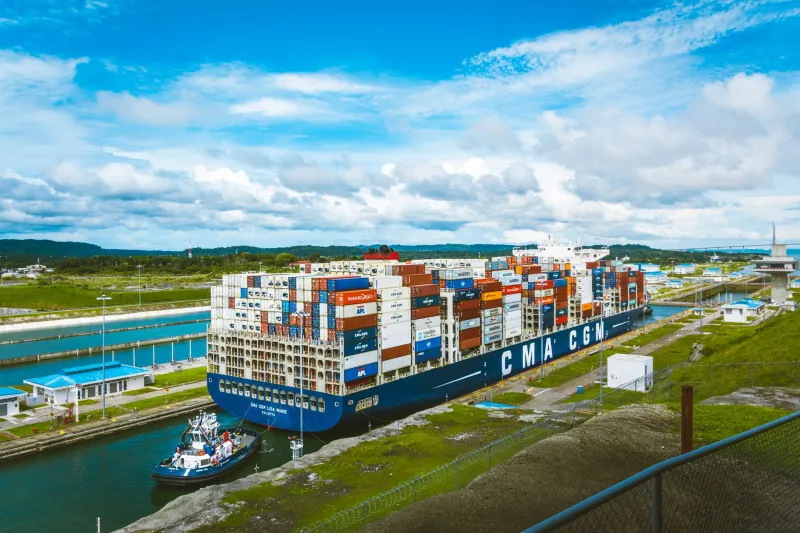
In 2023, a historic drought dropped water levels in the Panama Canal so severely that authorities had to restrict the number of daily transits and cap vessel weight limits. The backlog stretched for weeks. Companies that had built their entire just-in-time inventory model around Panama got a very expensive education in single-point-of-failure logistics.
Suez, meanwhile, saw Red Sea attacks by Houthi forces in late 2023 force major shipping lines to reroute around the Cape of Good Hope — adding weeks and tens of thousands of dollars per vessel to delivery timelines. The ripple effects hit American retailers hard, right in the middle of pre-holiday inventory stocking season.
The message wasn't subtle: the old chokepoints are choking.
The Isthmus Steps Up
Here's where it gets interesting. Central America's geography — that skinny, continent-connecting strip — has always been a logistical asset. But until recently, it was mostly exploited in one dimension: the Panama Canal as a single east-west transit corridor. What's emerging now is something more three-dimensional.
Multimodal logistics hubs are being developed across Guatemala, Honduras, Costa Rica, and Panama that treat the isthmus not as a passage but as a platform. Rail connections, road networks, air cargo facilities, and deepwater port expansions are converging to create something that looks less like a canal and more like a distributed logistics operating system.
Guatemala's Santo Tomás de Castilla port has seen a 40 percent increase in container throughput since 2021, according to regional trade data. Honduras is fast-tracking a special economic zone focused specifically on logistics and light manufacturing near its Atlantic coast. Costa Rica, already a nearshoring darling for tech and medical device companies, is expanding its airport cargo infrastructure to handle the overflow from overloaded Miami distribution centers.
"The corridor between the Gulf of Mexico and the Pacific Coast of Central America is basically an untapped superhighway," says logistics consultant Maria Elena Fuentes, who advises Fortune 500 companies on Latin American distribution strategy. "The infrastructure investment is finally catching up to the geographic potential."
US Companies Are Already Moving
The reshoring trend that accelerated during COVID hasn't reversed — it's deepened. But "reshoring" is increasingly a misnomer. What's actually happening is nearshoring at scale, with Central America as the preferred landing zone for companies that want supply chain resilience without fully eating the cost of domestic US manufacturing.
Appliance manufacturers, automotive parts suppliers, pharmaceutical companies, and consumer electronics assemblers are all expanding Central American operations. And critically, they're not just using the region to make stuff — they're using it to store, sort, and redistribute it.
The concept of "bonded logistics zones" — essentially tariff-advantaged warehousing and light processing hubs — is gaining traction across the isthmus. Panama's Colón Free Trade Zone, already one of the largest in the Western Hemisphere, is expanding its tech and pharma logistics capacity. Similar models are being piloted in Costa Rica and the Dominican Republic.
For US companies, the math is compelling. Shipping from Central America to East Coast ports runs roughly 4 to 7 days. Compare that to 25 to 35 days from Southeast Asia, with all the geopolitical and climate risk that now entails. Even accounting for slightly higher labor costs than Vietnam or Bangladesh, the total landed cost calculation is shifting.
The Caribbean Piece
Don't sleep on the island arc, either. Caribbean nations — particularly Jamaica, the Dominican Republic, and Trinidad and Tobago — are aggressively positioning themselves as logistics connectors between North and South America and between Atlantic and Pacific trade flows.
Jamaica's Kingston Container Terminal is being modernized with Chinese investment (which brings its own geopolitical complexity) to serve as a transshipment hub for cargo moving between North America, Europe, and South America. The Dominican Republic is expanding its Caucedo port with similar ambitions. These aren't just infrastructure projects — they're strategic bets on becoming the region's logistics nerve center.
"The Caribbean has always been a crossroads," says Dr. James Alcántara, an economist at a Santo Domingo think tank focused on regional trade. "What's different now is that the rest of the world is finally treating it that way."
The Resilience Premium
Here's the shift that supply chain people are quietly calling the "resilience premium": companies are now willing to pay more per unit for supply chain optionality. The ability to pivot, reroute, or absorb a disruption without a catastrophic stockout is worth real money — money that's showing up in Central American logistics investment.
Major third-party logistics providers like DHL, Maersk, and DB Schenker have all expanded their Central American footprints in the last two years. Venture capital is flowing into regional logistics startups. And US government programs like the Americas Partnership for Economic Prosperity are throwing federal dollars at infrastructure development explicitly designed to compete with Chinese-backed port projects in the region.
The competition angle matters. Every container that moves through a Central American hub built with US-allied investment is one that doesn't move through a Chinese-controlled facility. Washington has noticed, and the policy support — from EXIM Bank financing to USAID trade facilitation programs — is following.
What This Means for You
If you're a US business owner, an investor, or just someone who buys stuff online and notices when delivery times go sideways, this isn't abstract geopolitics. The reconfiguration of global logistics through the Americas corridor is going to affect prices, availability, and delivery windows for everything from electronics to groceries to medicine.
The companies that get ahead of this shift — that build supplier relationships, distribution partnerships, and inventory buffers in Central America and the Caribbean now — are going to have a structural advantage when the next Suez-style disruption hits. And it will hit.
The isthmus has always been the bridge between worlds. The world is finally building on it.