Who Controls the Dock Controls the World: How Central American Ports Learned to Play Hardball
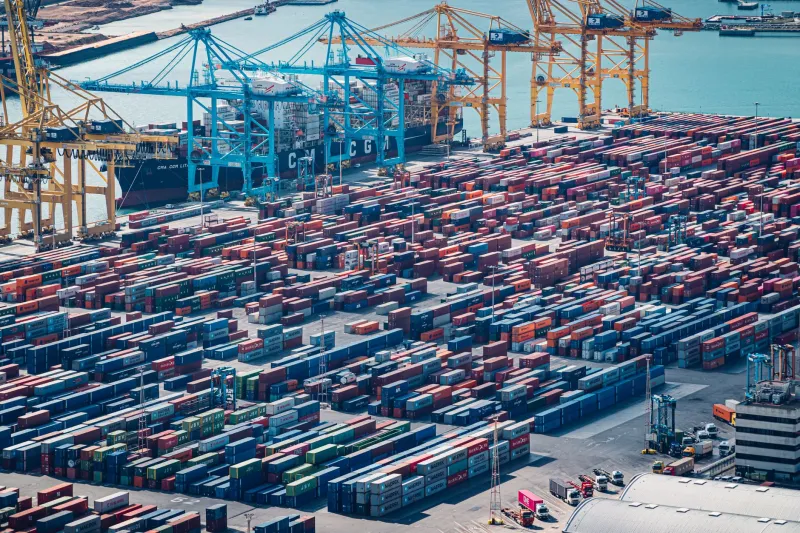
There's a moment every logistics executive dreads: the phone call where someone tells them their cargo is sitting at anchor, three miles offshore, waiting for a berth that won't open for another six days. That call used to be a minor inconvenience. After the supply chain catastrophes of the early 2020s — the backed-up LA ports, the Ever Given blocking the Suez Canal, the pandemic-era container shortages that made a refrigerator cost more than a used car — that call became an existential crisis.
And quietly, almost without anyone in the C-suite noticing, the people on the other end of that call started to realize just how much power they actually hold.
The Geography That Keeps Paying Off
Look at a map long enough and Central America starts to look less like a land bridge and more like a choke point with ambitions. Sitting between two oceans, threading the needle between North and South America, the isthmus has always been the world's geographic shortcut. But for most of modern history, that position translated into leverage for everyone except the people who actually lived there.
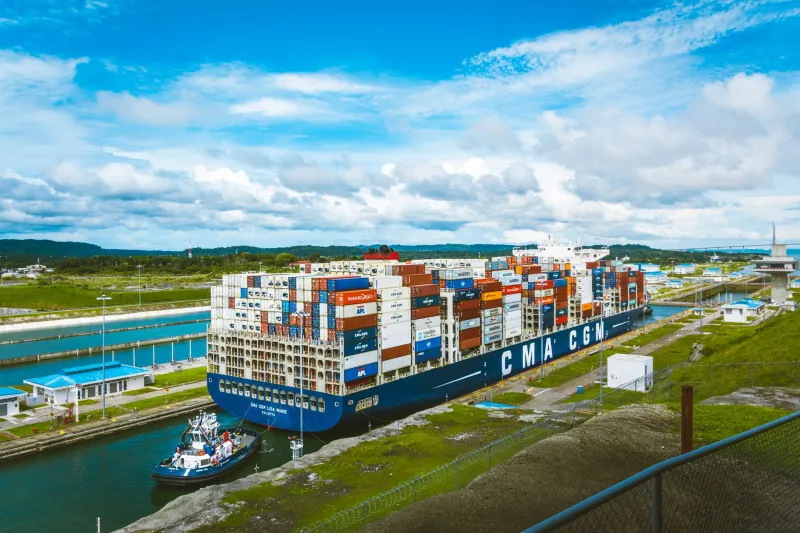
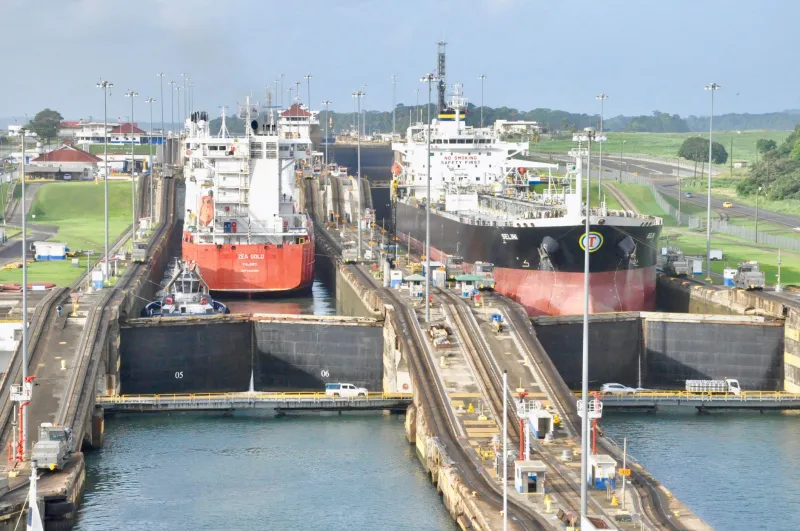
That calculus is changing. Panama's Canal expansion — the so-called New Panamax locks that opened in 2016 — was the first big signal. Suddenly, post-Panamax vessels that used to sail straight to LA or Long Beach could dock in ports along the Gulf of Mexico, the Caribbean, and the Atlantic Seaboard. The shipping lanes rewired themselves almost overnight.
But the real story isn't just Panama. It's what's happening up and down the isthmus, from Puerto Cortés in Honduras to Puerto Limón in Costa Rica to the emerging container facilities in Guatemala. Regional port authorities and the private operators who've invested in them are no longer just stamping paperwork and watching ships come and go. They're making strategic decisions — about infrastructure investment, about which shipping alliances get preferential berth access, about how to position themselves as the swing vote in global distribution networks.
The Last Mile Problem Nobody Wanted to Talk About
Here's a term you'll hear constantly in logistics circles: the last mile. It refers to the final leg of a delivery — getting a package from a distribution hub to your front door. It's notoriously expensive, inefficient, and hard to optimize. But there's a macro version of the same problem that operates at a continental scale, and Central American port operators are right in the middle of it.
When a container ship leaves Shanghai loaded with consumer electronics, auto parts, or pharmaceutical supplies, someone has to decide: does this cargo go through the Panama Canal to the US East Coast? Does it swing up to a transshipment hub in Jamaica or the Bahamas? Does it dock in a Mexican Pacific port and truck north? Or does it anchor in a Central American facility and get sorted, repackaged, and redistributed from there?
That decision used to be made entirely by the shipping lines and the multinational retailers. Now, port administrators are inserting themselves into that conversation. They're building the infrastructure — cold storage facilities, free trade zones, rail connections, digital customs platforms — that makes their ports genuinely attractive as distribution decision points, not just waystation stamps on a shipping manifest.
Marco Aurelio Paredes, a logistics consultant who works with port authorities in Honduras and Guatemala, puts it bluntly: "The companies that used to tell us what they needed are now asking us what we can offer. That's a completely different conversation."
Investment Is Following the Leverage
The numbers back him up. Foreign direct investment in Central American port infrastructure has accelerated sharply over the past five years. Chinese state-linked firms, Taiwanese shipping conglomerates, and US logistics giants have all made significant bets on the region. The competition for influence at key chokepoints isn't subtle — it's geopolitically charged in ways that make Washington pay attention.
The Biden and Trump administrations both, in their own ways, flagged concern about Chinese investment in Western Hemisphere port infrastructure. That concern, ironically, created an opening for Central American governments to play suitors against each other. If you've got the US government nervous about a Chinese operator and a Chinese firm ready to write a check, you've suddenly got negotiating room that didn't exist a decade ago.
Local entrepreneurs aren't sitting this one out either. A growing ecosystem of logistics startups — many of them founded by diaspora entrepreneurs with one foot in Miami and one foot in San Pedro Sula or San José — is building the software layer that makes these ports smarter. Real-time container tracking, AI-assisted customs clearance, dynamic berth scheduling: the digital infrastructure is catching up to the physical one, and it's increasingly being built by people who grew up navigating two worlds.
The Terms Are Getting Better
For communities that have spent generations watching their geography get exploited without much return, the shift in bargaining power is tangible — if still incomplete.
Port cities that used to accept whatever employment terms a foreign operator offered are now pushing for local hiring requirements, revenue-sharing agreements, and environmental standards that didn't exist in previous contract cycles. It's not a revolution. The power imbalances are real and deep. But the direction of travel has changed.
Coastal communities in Costa Rica and Panama have started to use their environmental leverage — their proximity to protected marine areas, their role in biodiversity corridors — as a negotiating chip with port developers. You want to expand that container terminal? Great. Here's what the community needs in return.
That kind of negotiation would have been laughed out of the room twenty years ago.
What Comes Next
The supply chain rethink isn't over. Nearshoring — the trend of moving manufacturing closer to the US market — is still accelerating, and Central America is one of the primary beneficiaries. Every new factory that opens in the region is another reason to have a robust port network nearby. The logistics demand is going to keep growing.
The question is whether the region can convert geographic advantage into durable institutional power — the kind that survives changes in government, shifts in trade policy, and the inevitable moment when a new administration in Washington or Beijing decides to play the game differently.
Port administrators, regional development banks, and local entrepreneurs are all betting that the infrastructure they're building now — physical and digital — will be sticky enough to make that power last.
The ships are going to keep coming. The question is who decides where they stop.