The New Silk Road Runs Through the Jungle: How Central America Is Becoming America's Backyard Factory
For decades, the global supply chain ran on a pretty simple premise: manufacture it cheap in Asia, ship it slow across the Pacific, and hope nothing breaks in between. That model worked — until it spectacularly didn't. Between pandemic port backlogs, geopolitical friction with China, and a growing appetite for faster delivery windows, American companies are asking a question they haven't seriously entertained in years: What if we made this closer to home?
The answer, increasingly, is pointing south. Way south — but not as far as you might think.
Geography Is Back, Baby
There's a reason the word "isthmus" keeps showing up in conversations about the future of global trade. Central America's narrow land corridor — the literal bridge connecting two continents — has always been a geographic marvel. But for most of modern economic history, it was treated more as a passthrough than a destination. That's changing fast.
Costa Rica, Honduras, Guatemala, Panama, and their neighbors sit within a four-hour flight of most major US cities. They share multiple time zones with the American east coast. They border both the Atlantic and Pacific Oceans. If you were designing a logistics hub from scratch and had a blank map, you'd basically draw Central America.
"The geography hasn't changed," said one supply chain consultant who works with Fortune 500 brands on nearshoring strategy. "What's changed is that companies are finally paying attention to it."
The Numbers Are Starting to Talk
Nearshoring — the practice of relocating manufacturing or assembly operations closer to the end consumer — has been a buzzword for years. But 2023 and 2024 turned buzzword into balance sheet line item. According to data from the Inter-American Development Bank, nearshoring investment into Latin America surged past $78 billion in announced projects over a two-year stretch, with Central America capturing a disproportionate share relative to its size.
Intel has had a chip assembly facility in Costa Rica since the 1990s — a fact that surprises most Americans, and one that quietly set the template for high-skill manufacturing in the region. More recently, medical device companies, textile manufacturers, and electronics assemblers have been expanding or establishing operations across the isthmus. Honduras's textile sector already supplies a significant chunk of America's branded apparel. Guatemala has become a growing hub for agro-industrial processing.
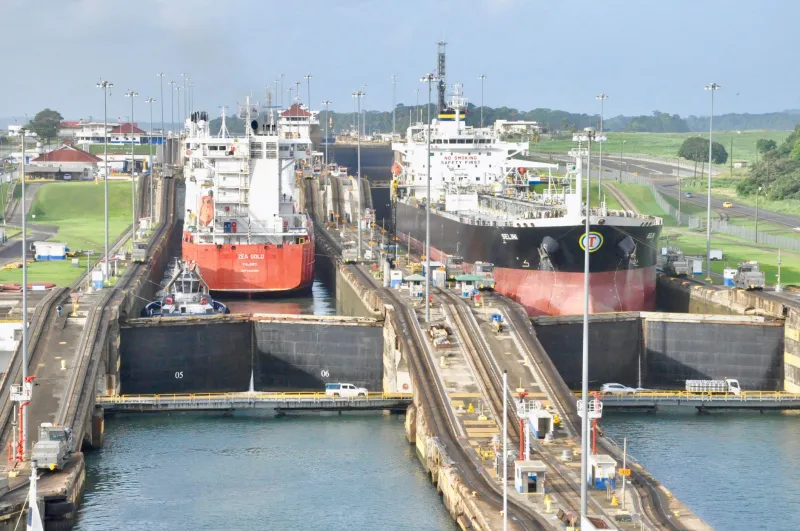
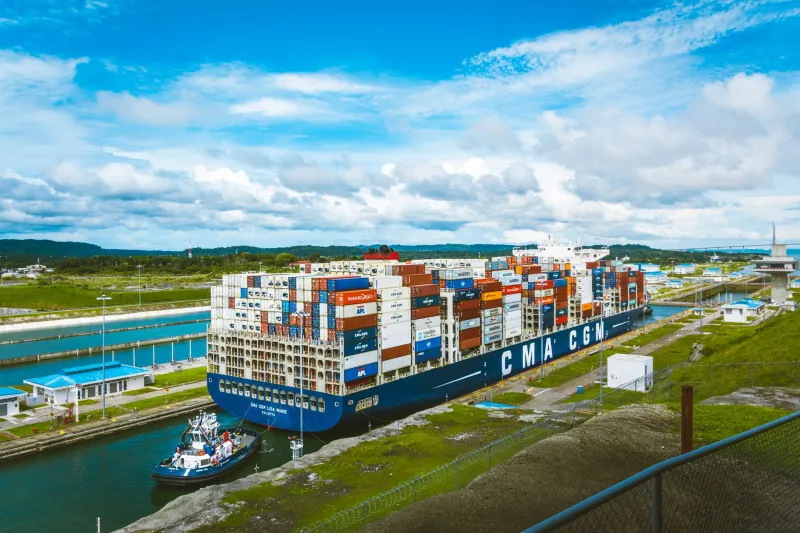
And Panama? The canal expansion completed in 2016 doubled the waterway's capacity, allowing post-Panamax vessels to pass through for the first time. That single infrastructure upgrade rewired port strategies across the entire Western Hemisphere.
The Tech Layer That Makes It Work
Raw geography and cheap labor used to be enough to attract manufacturing. Today, companies need more — and the region is delivering it in ways that don't always make headlines.
Costa Rica has developed a genuinely competitive tech workforce, with universities churning out engineers and data scientists who work in the same time zones as their American counterparts and cost a fraction of Silicon Valley rates. The country runs almost entirely on renewable energy, a selling point that matters enormously to corporations with aggressive ESG commitments.
Honduras and Guatemala are investing heavily in free trade zones — special economic areas with streamlined customs, tax incentives, and modern logistics infrastructure designed specifically to compete with Southeast Asian manufacturing hubs. These aren't the maquiladora-style sweatshops of the 1980s. Modern facilities are increasingly automated, ISO-certified, and integrated into real-time inventory management systems that talk directly to US distribution centers.
Fiber optic networks running along the isthmus corridor have also quietly improved, enabling the kind of digital coordination that just-in-time manufacturing requires. When a factory floor in San Pedro Sula can communicate with a warehouse management system in Dallas without meaningful latency, the operational barriers to nearshoring drop significantly.
What This Means for Your Amazon Cart
Here's where it gets tangible for regular American consumers. Lead times from China typically run 30 to 60 days by sea — and that's when everything goes right. From Central America, sea freight to US Gulf or East Coast ports runs closer to five to ten days. Air freight is even faster, and increasingly cost-competitive for higher-value goods.
That difference compounds. Shorter lead times mean companies can hold less inventory, respond faster to demand shifts, and reduce the kind of supply chain brittleness that left store shelves empty during the pandemic. Theoretically, that means fewer out-of-stock notifications, fewer shipping delays, and — eventually — more competitive pricing as logistics costs come down.
It also means the "Made in" label on American products is quietly shifting. Already, a notable share of apparel, medical equipment, and food products sold in the US originates in Central America. As investment accelerates, that percentage is set to grow.
The Complications Nobody's Advertising
None of this is frictionless. Central America's infrastructure gaps are real — road networks in several countries remain underdeveloped, bureaucratic customs processes can still slow shipments, and political instability in parts of the region introduces risk that multinational CFOs have to account for.
There's also a labor dimension that deserves honest attention. The same economic conditions that have driven migration northward — low wages, limited opportunity, climate vulnerability — are part of the equation here. Nearshoring investment has genuine potential to create well-paying jobs and reduce emigration pressure. But that outcome isn't automatic. It depends on whether investment comes with labor standards, wage growth, and community infrastructure, or whether it simply replicates the extractive model that's failed the region before.
Progressive economists and development advocates are watching closely, pushing for trade frameworks that tie investment incentives to measurable labor and environmental benchmarks. The Biden administration's Central American economic engagement strategy gestured at this. What comes next, politically and economically, will matter enormously for whether the region's supply chain moment becomes a genuine development story or a familiar disappointment.
The Bridge Is Open — The Question Is Who Crosses It
Central America has always been a place where big global forces converge — colonial trade routes, canal politics, Cold War proxy conflicts, migration patterns. The current supply chain realignment is just the latest chapter in that long story of the isthmus being too strategically important to ignore.
For American consumers, the upside is real: faster shipping, more supply chain resilience, and a potential buffer against the geopolitical risks baked into over-dependence on distant manufacturing. For the region itself, the stakes are higher and more complex — an opportunity to finally capture lasting economic value from a geographic advantage that the rest of the world has benefited from for centuries.
The containers are moving. The factories are opening. The question now is whether the wealth they generate stays in the jungle — or just passes through it.