The Label Says Italy. The Hands Are in Honduras.
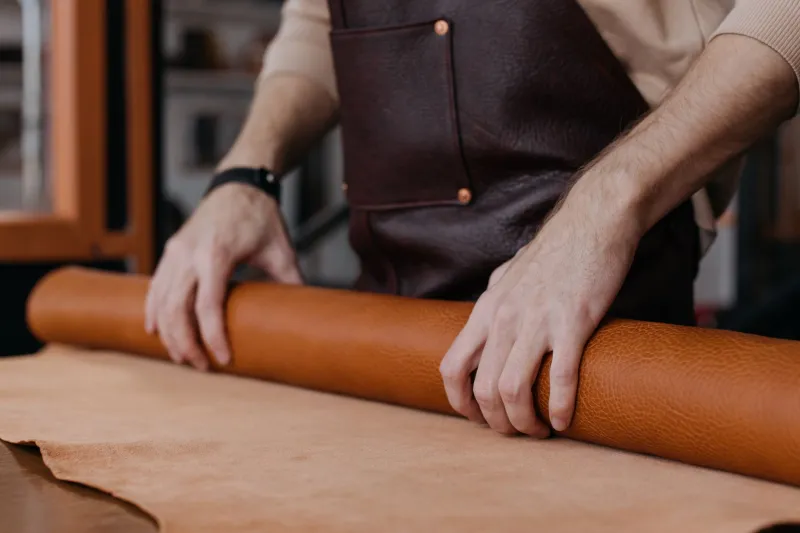
Somewhere in a workshop on the outskirts of San Pedro Sula, a woman named Doris is hand-stitching the interior lining of a leather bag that will eventually retail for $1,400 at a boutique in SoHo. She's been doing this for eleven years. She knows the stitch count. She knows the leather grade. She knows which seams have to be reinforced for the hardware to hang correctly. She does not know the name of the brand whose quality standards she meets every single day.
This is the shadow supply chain—not shadowy in the sense of illegal, but invisible in the way that inconvenient truths tend to be. Central America has been quietly producing high-value, precision-manufactured, and genuinely artisanal goods for global luxury and premium markets for decades. The story just never makes it onto the hang tag.
More Than Maquilas
The maquiladora model—offshore assembly of mass-market apparel, mostly for brands like Hanes and Fruit of the Loom—is what most people picture when they think about Central American manufacturing. And it's real. Honduras alone has dozens of large-scale assembly plants employing hundreds of thousands of workers in the textile sector.
But alongside that model, and mostly invisible to it, a different kind of production has been growing. Smaller facilities. Tighter tolerances. Higher margins. Products that require skill, consistency, and the kind of institutional knowledge that takes years to build.
In Guatemala, several workshops have developed long-term contracts with European fashion houses to produce embroidered textiles and hand-woven components that get incorporated into runway pieces. The weaving techniques are Indigenous Maya in origin—Ikat and backstrap loom methods that can't be mechanized without losing the quality that makes them desirable in the first place. The brands know this. The brands rely on it. The brands rarely say so publicly.
The Precision Economy Nobody Photographs
Costa Rica is the most prominent example of Central America's move up the manufacturing value chain—the country has been producing medical devices, semiconductors, and aerospace components for decades, with companies like Boston Scientific and Medtronic running major operations there. But the model is spreading.
In El Salvador, a cluster of small and mid-sized manufacturers has developed specializations in high-precision metal components—parts for surgical instruments, dental equipment, and industrial machinery—that require certification processes and quality controls as rigorous as anything you'd find in Germany or Japan. These facilities are ISO-certified, regularly audited by international clients, and staffed by engineers and technicians who've built careers around tolerances measured in microns.
The irony is that the very precision that makes these manufacturers valuable also makes them invisible. Their clients—mostly US and European companies—prefer it that way. "Made in El Salvador" doesn't test well in focus groups for surgical instruments, even when the quality is indistinguishable from European production. So the origin disappears into the supply chain, and the Salvadoran engineers who built it get no credit.
Artisanal Isn't Just a Marketing Word Here
Panama's Guna Yala community produces molas—intricately layered textile panels using a reverse-appliqué technique that requires extraordinary manual dexterity and years of practice. Authentic molas have entered the global craft market at price points that reflect their labor intensity, and a growing ecosystem of fair-trade intermediaries is working to connect Guna artisans directly with buyers in the US and Europe who actually want to know where their products come from.
This is the hopeful end of the spectrum: craft production where the origin story is the value proposition, and where communities are building the export infrastructure to capture that value themselves rather than ceding it to middlemen.
But it exists alongside the more troubling reality—that for every Guna artisan selling molas with her name attached, there are dozens of Doris's in San Pedro Sula whose craftsmanship disappears into someone else's brand equity.
Nearshoring's Quiet Premium Tier
The nearshoring conversation in US business media has mostly focused on cost and logistics—moving production closer to American consumers to reduce shipping times and supply chain risk after the COVID-era disruptions. Central America has been a beneficiary of this trend, with new investment flowing into the region from companies looking to reduce dependence on Asian manufacturing.
What's less discussed is that nearshoring is creating a quality tier, not just a cost tier. Several US brands in the premium apparel, home goods, and specialty food sectors have discovered that Central American production—when properly invested in and fairly compensated—can match or exceed the quality of what they were getting from more distant suppliers, with faster turnaround and better communication.
A small but growing number of these brands are making origin transparency part of their pitch. A US-based premium coffee equipment company now features the Guatemalan metalworkers who produce its pour-over accessories in its marketing. A New York fashion label has built its entire brand story around its partnership with Honduran artisans, paying a premium and crediting the craftspeople by name.
These are outliers. But they're pointing toward what the relationship between American brands and Central American producers could look like if the industry decided to be honest about it.
Credit Where It's Long Overdue
The isthmus has always been the place where things pass through—goods, people, capital, ideas. What's harder to see, because it's been deliberately kept out of frame, is how much of what passes through was actually made there, by skilled hands that deserve recognition and fair compensation.
Doris in San Pedro Sula is not a footnote in someone else's luxury brand story. She's a craftsperson with expertise that's genuinely hard to find and genuinely worth valuing. The question for American consumers—who increasingly say they care about supply chain ethics—is whether they're willing to push brands to tell that story honestly, even when it complicates the romance of the label.
Because the label might say a lot of things. But the hands know exactly where the bag was made.