Squeeze Play: How the World's Narrowest Places Keep Producing Culture That's Way Too Big for Their Borders
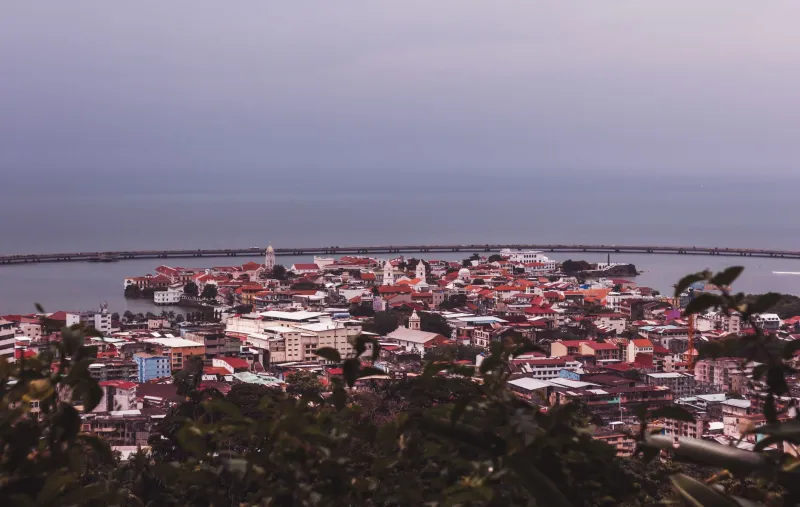
Imagine stuffing the cultural output of New York City, the sonic experimentation of New Orleans, and the culinary ambition of Los Angeles into a corridor of land you could drive across in under two hours. That's roughly what it feels like to exist inside an isthmus — one of those narrow land bridges that stitch continents together while sitting at the crossroads of everything. And if history has taught us anything, it's that tight spaces don't shrink culture. They supercharge it.
From Panama to the Malay Peninsula to the Yucatán, isthmuses have functioned less like geographic accidents and more like pressure cookers. The narrower the land, the more intense the cultural fusion. And the more intense the fusion, the more likely something entirely new — and entirely exportable — ends up influencing the world far beyond those borders.
Geography as a Catalyst, Not a Constraint
Let's start with the obvious: when you live on a land bridge, you don't get the luxury of isolation. Trade routes, migration patterns, colonial ambitions, and diaspora flows all pass through you. You can't opt out of the conversation. That forced participation is, counterintuitively, one of the most creatively fertile conditions a culture can find itself in.
Panama is the textbook case. For centuries, it was the literal hinge between the Atlantic and Pacific worlds. Spanish galleons, West African enslaved peoples, Indigenous Panamanian communities, Chinese railroad laborers, Caribbean migrant workers — all of them passed through, and many stayed. That layering didn't dilute Panamanian identity. It built one that's impossible to replicate anywhere else on earth.
The music alone tells the whole story. Reggaeton, which now dominates global pop charts and soundtracks everything from NBA arenas to TikTok dances in suburban Ohio, has deep, complicated roots in Panama's Canal Zone. The Afro-Antillean communities who settled there brought Caribbean rhythms that mixed with American R&B filtering in from U.S. military bases, then collided with Colombian vallenato drifting across the border. The result was something that eventually traveled to Puerto Rico, mutated again, and became the genre that Bad Bunny now uses to break Spotify records. An isthmus started that chain reaction.
The Pressure Cooker Principle
Sociologists who study cultural innovation talk about something called "recombinant creativity" — the idea that the most original ideas don't come from blank slates but from the collision of existing ones. Isthmuses are basically recombinant creativity machines. You can't avoid the collision.
Central America as a whole operates on this principle. Guatemala, Honduras, El Salvador, Nicaragua, Costa Rica, and Panama together span a stretch of land that, at its narrowest, is barely 30 miles wide. Yet that corridor has produced Indigenous textile traditions that are now influencing high fashion runways in New York, fusion cuisines that are quietly rewriting what "Latin food" means to American diners, and social movements — particularly around Indigenous rights and environmental justice — that have global resonance.
Walk through any major U.S. city with a significant Central American diaspora — Los Angeles, Houston, Washington D.C., New York — and you'll see this compression principle playing out in real time. Communities that were geographically squeezed back home don't suddenly spread out and assimilate quietly. They build dense, interconnected cultural ecosystems that tend to innovate fast and export hard. The isthmus mentality travels with the people.
Fashion at the Crossroads
The textile traditions coming out of Guatemala's highland Maya communities are a perfect example of how isthmus culture punches above its weight. Huipiles — the hand-woven blouses that Maya women have worn for centuries — use color combinations and geometric patterns that are so visually sophisticated that they've been directly referenced (sometimes stolen outright, which is its own important conversation) by designers from Anthropologie to Alexander McQueen.
What makes these textiles so compelling isn't just their beauty. It's that they encode centuries of cultural exchange. The patterns shifted as communities traded, migrated, and survived colonization. They absorbed influence without losing their core. That's the isthmus move — take what passes through, transform it, and send something new back out into the world.
Young Guatemalan-American designers in cities like L.A. are now reclaiming those traditions on their own terms, building brands that speak to both their Indigenous heritage and their American present. They're not choosing between cultures. They're doing what isthmus geography has always demanded: holding both at once.
Food as the Most Democratic Export
If you want to understand how narrow geographies create outsized cultural footprints, just follow the food. Central American cuisine has been one of the most quietly influential forces reshaping American eating habits over the past two decades — even if it hasn't always gotten the credit.
Take the pupusa. El Salvador's stuffed corn masa disc was barely a blip on most American food radars twenty years ago. Now it's showing up in food halls in Brooklyn, on menus in Portland, and in frozen food aisles across the country. The same trajectory is happening with Guatemalan pepián, Honduran baleadas, and Nicaraguan vigorón. These dishes didn't just travel with immigrants — they adapted, found new audiences, and started influencing how American chefs think about masa, fermentation, and the possibilities of corn-based cooking.
The isthmus has always been a place where food had to stretch — where you cooked with what came through on the trade routes, what grew in the volcanic soil, what your neighbors brought from their own traditions. That resourcefulness created cuisines that are inherently flexible and inherently interesting. And flexible, interesting food travels well.
Why This Matters Right Now
The United States is in the middle of a demographic and cultural shift that's been building for decades. Latino communities — and Central American communities specifically — are no longer a footnote in the American cultural story. They're writing major chapters. The music on the radio, the food on the table, the political organizing happening in cities across the country — all of it bears the fingerprints of isthmus culture.
Understanding why these narrow geographies produce such outsized influence isn't just an interesting geography lesson. It's a framework for understanding where American culture is actually heading. When you compress diverse peoples into tight spaces and force them to negotiate, trade, and create together, you don't get dilution. You get acceleration.
The isthmus has always known this. The rest of the world is just starting to catch up.
So the next time a song comes on that you can't quite categorize, or you find yourself obsessed with a dish that seems to draw from five different traditions at once, or you watch a fashion trend emerge from a community that mainstream media has barely acknowledged — ask yourself where it started. There's a decent chance the answer involves a narrow strip of land somewhere between two oceans, doing what narrow strips of land have always done best.
Making something too big to contain.