The Doctor Will See You Now — From Two Countries Away
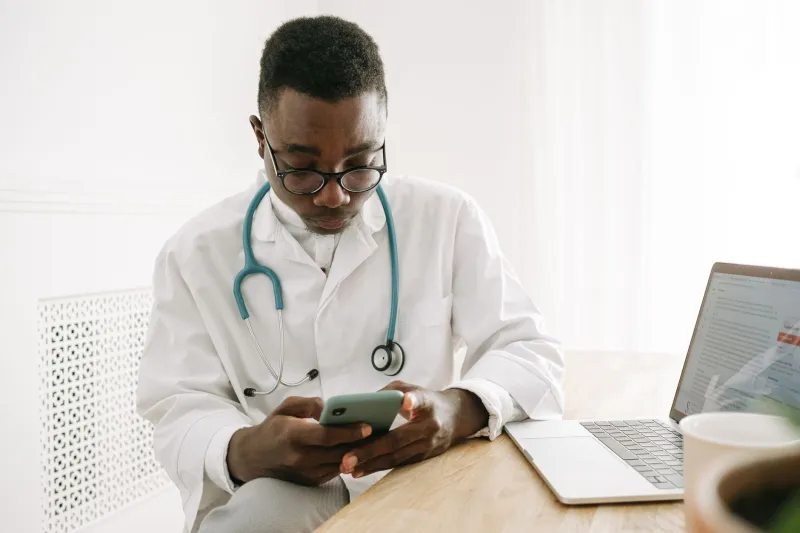
Somewhere between a WhatsApp voice note and a follow-up appointment at a strip-mall clinic in suburban Maryland, a new kind of healthcare is quietly taking shape. It doesn't have a fancy brand name. It's not backed by venture capital. And it definitely isn't showing up in the latest think pieces about healthcare innovation. But for hundreds of thousands of Central American immigrants living in the US, it might be the most important medical system they've ever had access to.
We're talking about a growing, largely informal network of physicians — many of them trained in Guatemala, Honduras, El Salvador, Nicaragua, and Panama — who are bridging the geographic and cultural divide between their home countries and the communities they now serve stateside. Some hold dual licenses. Others operate through telemedicine platforms that skirt jurisdictional gray zones. A few run neighborhood clinics specifically designed to serve patients who've never had a primary care doctor in their lives.
The result is an alternative healthcare ecosystem that's flying almost completely under the radar of mainstream American medicine.
Why Mainstream Healthcare Keeps Missing the Mark
Let's be real: the US healthcare system was not built with the Central American diaspora in mind. Language barriers are the obvious issue — but they're just the entry point. Beyond translation, there's a deeper problem of cultural literacy that most American medical institutions still haven't cracked.
Take something as routine as explaining a diagnosis. In many Central American households, medical authority figures are treated with a deference that can actually get in the way of honest communication. Patients may nod along without fully understanding their treatment plan. They may avoid follow-up appointments because the co-pay feels impossible, or because taking time off work means losing a shift they can't afford to miss. They may rely on remedios caseros — home remedies passed down through generations — not out of ignorance, but because those remedies have always been more accessible than a doctor's office.
American physicians, even well-meaning ones, often lack the framework to navigate any of this. The result? Patients who feel unseen, unheard, and underserved — and who quietly stop showing up.
The Isthmus-Trained Doctor in the American Waiting Room
Enter the cross-border physician. These are doctors who grew up in isthmus communities, trained in medical schools in Central America or in US programs with strong Latin American ties, and who now serve patients on both sides of the geographic equation.
Dr. Claudia Menéndez, a Guatemalan-American internist practicing in the DC metro area, describes her work as "translation in every direction." She's not just converting Spanish to English — she's converting medical culture, economic context, and lived experience into something her patients can actually use.
"I know what it means when a patient tells me they've been drinking agua de Jamaica for their blood pressure," she says. "I don't dismiss it. I work with it. That's not something you learn in a textbook."
Menéndez also maintains an informal consulting relationship with a clinic in Guatemala City, where she grew up. Through encrypted video calls and shared patient records (with consent), she helps coordinate care for patients whose families span both countries — a grandmother managing diabetes in Quetzaltenango, a son in Virginia trying to understand what her labs actually mean.
This kind of dual-country practice isn't the exception. It's becoming a pattern.
Telemedicine as a Bridge, Not a Buzzword
The pandemic turbocharged telemedicine adoption across the board, but for Central American diaspora communities, virtual care had a different kind of resonance. Suddenly, it was possible to consult with a doctor back home — someone who knew your medical history, your family, your neighborhood pharmacy — without getting on a plane.
Platforms like Médico en Línea and several smaller, community-built apps began filling the gap that American telehealth giants like Teladoc weren't designed to fill. These services aren't always slick. Sometimes it's literally a WhatsApp group with a trusted physician moderating. But they work — because they're built around the actual needs of the people using them.
The licensing complications are real and thorny. A physician licensed in Honduras can't technically practice medicine on a patient physically located in Virginia. But when that patient has no insurance, doesn't speak English, and is trying to figure out whether a symptom warrants an ER visit, the legal fine print tends to feel pretty abstract.
Advocates in the space are pushing for regulatory frameworks that acknowledge this reality — not to create a loophole, but to bring a functioning system out of the shadows and give it the protections and accountability structures it deserves.
The Clinic as Community Anchor
In cities with large Central American populations — Los Angeles, Houston, Washington DC, New York — a new generation of community health clinics is emerging that explicitly centers isthmus culture in its model of care.
These aren't your average federally qualified health centers, though some operate within that framework. They're spaces where the front desk staff speaks Guatemalan Spanish, where the waiting room plays Bachata instead of CNN, where the intake forms don't make you feel like a bureaucratic puzzle to be solved. Small details, maybe. But for a patient who's spent years feeling invisible in medical spaces, they matter enormously.
Some of these clinics are also beginning to integrate traditional healing practices alongside conventional medicine — not as a replacement, but as an acknowledgment that health is cultural, not just clinical. Curanderismo, herbal knowledge, spiritual dimensions of illness — these aren't fringe ideas in isthmus communities. They're part of a holistic understanding of the body that many Central American patients bring with them, whether or not their American doctors are ready to engage with it.
What This Means for the Future of Diaspora Health
The cross-border healthcare model that Central American physicians are quietly building isn't just a workaround for a broken system. It's a proof of concept for what culturally competent, geographically flexible medicine could look like at scale.
Imagine a formal network of bilingual, bicultural physicians licensed to practice across borders. Imagine telehealth platforms designed from the ground up for diaspora communities — not adapted from mainstream tools, but built with isthmus realities at the center. Imagine health data that follows patients across countries, so a doctor in San Pedro Sula actually knows what happened at that clinic in Silver Spring.
None of this is science fiction. The infrastructure, the talent, and the demand already exist. What's missing is visibility — and the political will to take this ecosystem seriously.
For now, the doctors keep doing what they've always done: showing up, code-switching, translating in every direction, and holding together a community that mainstream medicine keeps struggling to see.
The isthmus has always been a bridge. Turns out, that goes for healthcare too.