Small Land, Big Stakes: Why the World's Narrowest Places Are Calling the Shots
There's a concept geographers and military strategists have quietly obsessed over for centuries: the chokepoint. A narrow pass, a thin strip of land, a tight maritime corridor — places where the sheer geography of the Earth forces everything through a bottleneck. Ships. Pipelines. Data cables. Armies. In the 2020s, those bottlenecks are starting to feel less like geographic trivia and more like the actual hinges of global power.
And Central America? It's one of the biggest hinges of all.
The Chokepoint Playbook Is Back
For a while, globalization was supposed to make geography irrelevant. The internet would flatten everything. Supply chains would stretch seamlessly across the planet. Borders would blur. Then came a pandemic, a war in Ukraine, a container ship stuck sideways in the Suez Canal, and suddenly everyone remembered that physical geography still matters — a lot.
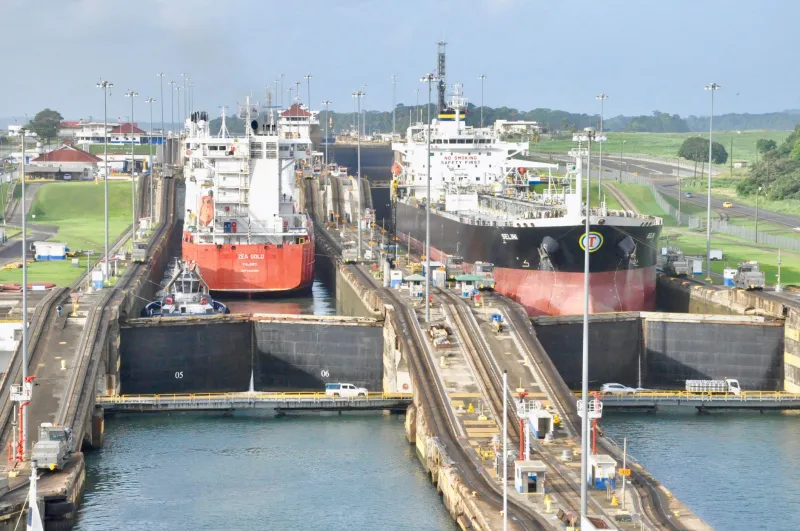
The Suez Canal moves roughly 12% of global trade. The Strait of Malacca, squeezed between Malaysia and Indonesia, handles about 40% of global shipping. The Panama Canal — the most famous isthmus on Earth — processes somewhere around 5% of all world trade, a number that punches way above its geographic weight. When any one of these corridors hiccups, global markets feel it within days.
What's changed in the 2020s isn't the geography. It's the stakes attached to it. Great power competition between the US and China has reanimated every Cold War-era conversation about who controls what passage, what port, what cable landing station. And that conversation runs straight through Central America.
Panama Is Not Just a Canal Anymore
Most Americans, if they think about Panama at all, picture the canal. Maybe they vaguely remember the 1999 handover from US control. But Panama's geographic relevance in 2025 is about a lot more than cargo ships.
China's Belt and Road Initiative has been quietly building infrastructure influence across the region for years. Panama was the first Latin American nation to formally join the initiative, back in 2017. Since then, Chinese state-linked companies have invested in port facilities on both the Atlantic and Pacific ends of the canal — a fact that lit up alarm bells in Washington and eventually contributed to Panama's decision to formally exit the Belt and Road agreement in 2024 under significant US pressure.
That diplomatic tug-of-war is a preview of what's coming. When a country sits at the literal junction of two oceans, every infrastructure deal becomes a geopolitical statement. A Chinese-operated port isn't just a Chinese-operated port. It's a data collection point, a potential naval resupply node, a leverage mechanism. At least, that's how the Pentagon reads it.
The Digital Chokepoint Nobody's Talking About
Here's where it gets really interesting for anyone paying attention to the tech side of this story: undersea data cables.
About 95% of all international internet traffic travels through undersea fiber-optic cables. And a significant number of those cables make landfall in — you guessed it — the narrow coastal zones of Central America and the Caribbean. The isthmus isn't just a physical bridge between continents. It's increasingly a digital one.
The US and its allies have grown increasingly anxious about Chinese telecommunications companies — Huawei chief among them — gaining access to cable infrastructure in the region. The Biden administration's "Clean Network" initiative and subsequent efforts under the current administration have pushed back against Chinese involvement in cable projects running through Latin American waters. Google, Meta, and other US tech giants have been quietly rerouting or building new cable systems specifically to avoid infrastructure that China could theoretically access.
For countries like Costa Rica, Guatemala, and Honduras, this creates an unusual kind of leverage. Their coastlines, their territorial waters, their regulatory environments — all of it suddenly matters to Silicon Valley boardrooms and National Security Council meetings in ways it didn't a decade ago.
Energy Security and the Two-Ocean Advantage
There's another dimension to this that doesn't get nearly enough coverage in US media: energy.
Liquefied natural gas (LNG) is the new oil in terms of geopolitical maneuvering, and the routes it travels matter enormously. Central America's Pacific and Atlantic access makes it a natural transit point for energy infrastructure serving both Asian and European markets — a relevance that jumped dramatically after Russia's invasion of Ukraine scrambled Europe's energy supply chains.
Several proposed LNG terminal projects in the region have attracted investment interest from US, European, and Asian energy companies, each maneuvering for position in what's shaping up to be a multi-decade competition over who supplies whom with what fuel. The isthmus, again, is the geography that makes it all possible.
What This Means for US Policy (And Why Most Americans Are Missing It)
Here's the disconnect: most Americans still think about Central America primarily through the lens of immigration. It's a real and important issue, obviously. But reducing the region to a migration story misses a much larger strategic picture that US policymakers are increasingly scrambling to catch up on.
The Biden administration's Americas Partnership for Economic Prosperity was a step toward reframing the relationship — less charity, more genuine economic partnership. Whether the current political moment accelerates or reverses that reorientation remains to be seen. But the underlying geographic logic doesn't change with administrations.
Central America is where two oceans meet, where North and South America connect, where undersea cables land, where shipping lanes converge. That's not going to change. What will change is whether the US engages with the region as a genuine strategic partner — investing in infrastructure, digital connectivity, and economic development — or cedes that influence to competitors who are already there and building.
The Istmo Perspective
At Istmo, we've always believed that the isthmus isn't just a geographic metaphor — it's a living, breathing example of what happens when different worlds have to figure out how to coexist in a tight space. That's been true for the cultures, the cuisines, the music, and the people who've moved between continents for generations.
Now it's true for great power politics, too.
The narrow places of the world — Panama, Suez, Malacca, the Bosphorus — are not footnotes to global history. They're often the chapters where the most consequential decisions get made. And as the 2020s push forward into an era defined by competition over trade, technology, and energy, the people who live in and around these chokepoints are going to have more agency, more visibility, and more leverage than the rest of the world has given them credit for.
The isthmus effect is real. The only question is whether the right people are paying attention.