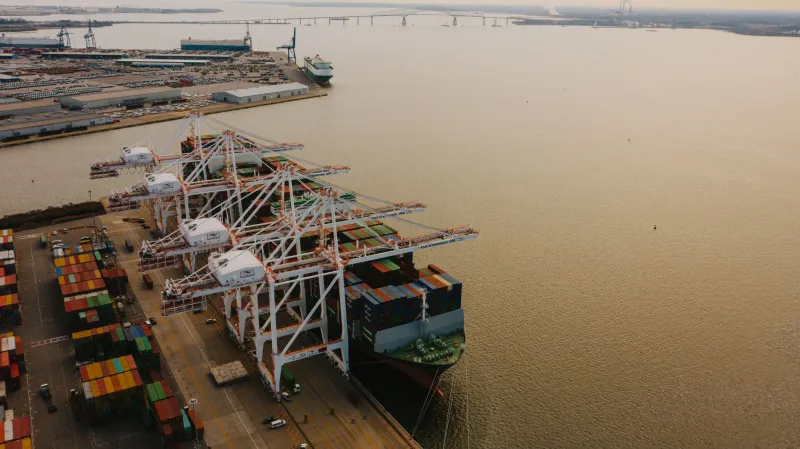
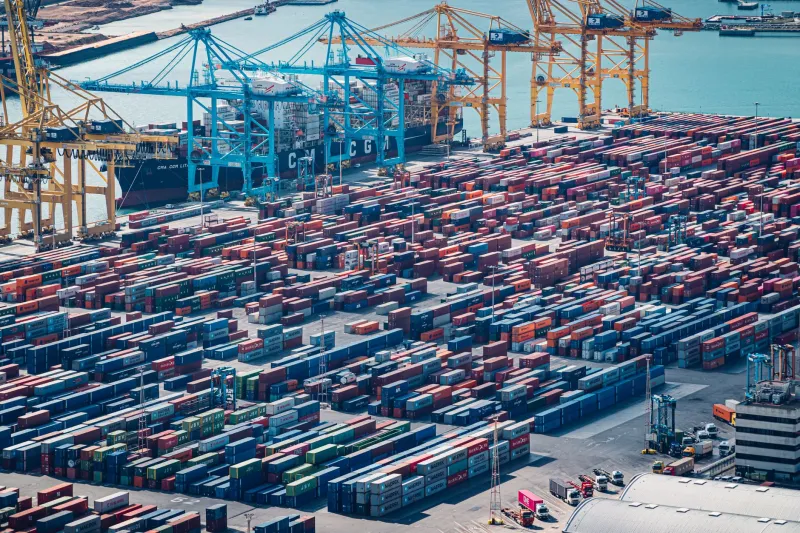
Small Land, Long Reach: How the World's Chokepoints Became the New Superpower Bargaining Chips
Here's a thought experiment: What happens when the smallest country in the room holds the only door?
That's not a riddle. That's Tuesday in global geopolitics right now. A handful of isthmus nations — places that most Americans couldn't point to on a map without a helpful nudge — are sitting on some of the most strategically loaded real estate on the planet. And they've figured out how to use it.
We're talking about a fundamental shift in how power actually moves in the 21st century. Not through nuclear arsenals or GDP rankings, but through geography. Through the narrow gates.
The Chokepoint Economy Is Real, and It's Growing
Let's start with the basics. A geographic chokepoint is exactly what it sounds like: a place where the flow of goods, energy, data, or people gets squeezed through a narrow passage. The Panama Canal. The Strait of Malacca between Malaysia and Indonesia. The Bab el-Mandeb off Yemen's coast. The Turkish Straits connecting the Black Sea to the Mediterranean.
For most of the 20th century, these places were treated like infrastructure assets — things to be managed, maintained, occasionally fought over, but not really negotiated with. The superpower model was simple: big countries controlled chokepoints, and small countries were grateful for the arrangement.
That model is cracking.
Over the last decade, the nations and territories that sit astride these passages have started leveraging their position in ways that would have seemed almost reckless twenty years ago. Panama renegotiated port concession contracts in ways that directly rattled Washington. Malaysia quietly became the center of a tug-of-war between Chinese infrastructure investment and American tech-security concerns. Ecuador's position on trans-Pacific undersea cable routes has made it a quiet but intense focus of US diplomatic attention.
The leverage isn't hypothetical. It's showing up in real negotiations, real sanctions workarounds, and real supply chain disruptions.
Panama's Long Game
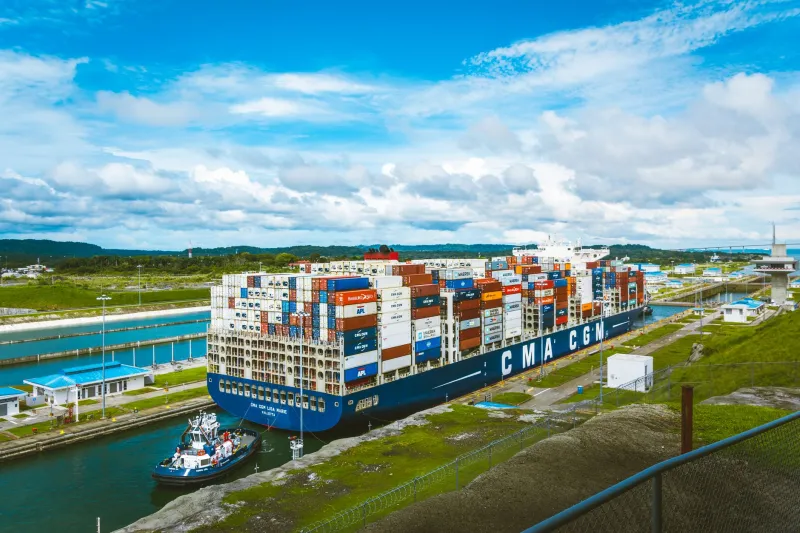
Let's talk about Panama specifically, because it's the clearest example of what this new dynamic looks like in practice.
In 2021, Panama quietly allowed Hutchison Ports — a Hong Kong-based conglomerate with documented ties to Chinese state interests — to continue operating terminals on both ends of the canal, despite sustained pressure from Washington to revisit the arrangement. The US framed it as a security concern. Panama framed it as a sovereignty issue. The subtext was unmistakable: we know what we're sitting on.
More recently, drought conditions caused by El Niño severely reduced water levels in Gatun Lake, which feeds the canal's locks. The result? A traffic jam of container ships stretching for miles, with some vessels waiting weeks for passage. Shipping rates spiked globally. US importers scrambled. And Panama found itself at the center of conversations about climate resilience, infrastructure investment, and transit fees that it had never been invited to join before.
Panama used that moment. The country accelerated talks about expanding freshwater management infrastructure with international partners, attracted new investment interest from both Asian and European logistics giants, and quietly raised its profile in climate-focused multilateral forums. A drought that could have been a crisis became a negotiating asset.
Malacca: Where the Digital and Physical Chokepoints Collide
The Strait of Malacca is arguably the most critical maritime passage in the world — roughly 40% of global trade passes through it annually, including most of the oil flowing to China, Japan, and South Korea. But here's what makes it genuinely fascinating right now: the strait is also directly underneath some of the world's most important undersea fiber optic cables.
That overlap — physical shipping chokepoint plus digital infrastructure chokepoint — has turned Malaysia, Singapore, and Indonesia into some of the most intensely courted nations in the world. The US, China, Japan, and the EU are all competing to fund, build, or secure cable landing stations in the region.
Singapore has played this brilliantly. It's maintained a studied neutrality that lets it extract concessions from every direction. Malaysia has been more aggressive, using proposed cable route approvals as leverage in broader trade and technology negotiations. Indonesia, with its sprawling archipelago straddling the strait, has begun asserting more direct control over which cable projects get approved in its territorial waters.
This isn't just about fiber optics. It's about who controls the physical layer of the internet in the most data-dense region of the global economy. And the countries doing the controlling are not the G7.
What This Means for US Foreign Policy
For American policymakers, the rise of chokepoint leverage represents a genuine strategic headache — and one that the foreign policy establishment has been slow to fully internalize.
The old playbook assumed that economic and military dominance translated into control over strategic geography. But that assumption depended on smaller nations lacking the institutional capacity, diplomatic sophistication, or alternative partners to push back. All three of those conditions have changed.
China's Belt and Road Initiative, whatever its flaws, gave dozens of chokepoint nations a credible alternative to US-aligned infrastructure investment. That alternative doesn't have to be better — it just has to exist. The moment Panama or Malaysia or Djibouti can credibly threaten to deepen ties with Beijing, Washington has to start actually negotiating instead of just dictating terms.
The Biden administration made some moves in this direction with the Partnership for Global Infrastructure and Investment (PGII), which aimed to counter BRI with Western-aligned infrastructure funding. But implementation has been slow, and the amounts pledged still lag behind what China has actually spent on the ground.
Meanwhile, the Trump administration's return to a more transactional foreign policy approach creates new uncertainty. Chokepoint nations are watching closely to see whether US commitments to infrastructure partnerships hold — and they're hedging accordingly.
The Leverage Is Only Going to Grow
Here's the thing about geographic chokepoints: climate change is making them more valuable, not less.
As weather patterns become more volatile, the reliability of transit routes becomes a premium commodity. The Arctic is opening new shipping lanes, but they're inconsistent and legally contested. Traditional routes through isthmuses and straits are becoming more critical precisely because they're known quantities — even when, like Panama's canal, they face their own climate vulnerabilities.
The nations that sit on these passages are increasingly aware that they hold something irreplaceable. You can build a new factory. You can reroute a supply chain. You cannot build a new isthmus.
For the US, this means the foreign policy conversation around places like Central America, Southeast Asia, and the Horn of Africa needs to get a lot more sophisticated — and fast. The era of treating these regions as passive recipients of American strategic attention is over.
The narrow gate has always determined who gets through. The difference now is that the gatekeeper knows it.
Istmo covers the stories that live at the intersection of geography, culture, and power — the places where the world gets squeezed and something new comes out the other side.