The Voice Map: Why Central American Accents Are Becoming American Audio’s Sharpest Signal
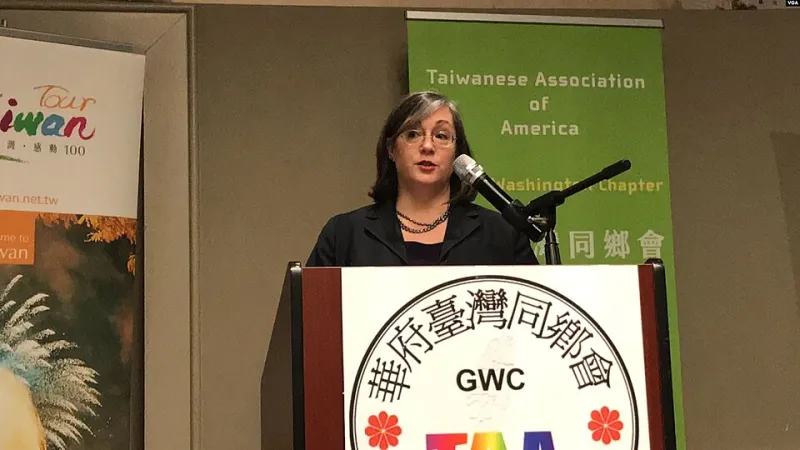
Photo: Photographed by: Chen-fang Tina Chung, Voice of America correspondent, Public domain, via Wikimedia Commons
For years, American audio casting treated “Latinx” as a single dial. One warm, vaguely Mexican or studiously neutral Spanish voice could stand in for the whole hemisphere. In 2026, that shortcut is starting to sound cheap. Podcast networks, audiobook publishers, streaming ad buyers, and audio-drama studios are hiring Central American hosts, narrators, and producers with a new brief: sound like a place, not a category.
That shift is small enough to miss on a commute. It is also big enough to redraw the map of who gets paid to speak in America.
From One Dial to a Dialect Map
“For a long time, ‘Latino’ meant one voice, usually a very smooth one,” says Marisol Vega, an audio producer in Los Angeles who casts bilingual campaigns. “Now clients ask which country, which city, which generation. They want Salvadoran-American. They want Guatemalan. They want someone who can say ‘pues’ without it sounding like a costume.”
That precision is partly a response to audience behavior. Bilingual US listeners are not a monolith, and they are quick to hear flattening. A generic accent can read as corporate, dubbed, or borrowed. A specific one reads as home. For brands trying to reach Central American diaspora communities in Los Angeles, Houston, Miami, Washington, D.C., and New York, the difference is not cosmetic. It is the difference between an ad that gets skipped and one that gets screenshotted into the family group chat.
The Podcast Boom Finds Its Places
Podcasting has been the most visible laboratory. Shows about migration, food, music, politics, and family life are increasingly hosted by Central American-Americans who code-switch without sanding off the edges. Some record in US studios; others record in San Salvador, Guatemala City, or Panama City and send files north. The isthmus has become a production bridge — narrow geography, long audio reach.
“People think specificity narrows your audience,” says Damián Ríos, a Nicaraguan-American podcast editor in Chicago. “It does the opposite. If you tell a story about your grandmother’s sopa de res, you get messages from people who had a different grandmother and a different soup. They recognize the texture.”
That texture is becoming a selling point. Audio is intimate; listeners detect fake. A voice that can move between English, Spanish, and the particular rhythm of a diaspora household carries credibility that a generic read cannot manufacture. For audiobooks, that means narrators who can handle place names, family slang, and the small pauses that make dialogue feel lived-in. For ads, it means casting directors who know that a Panamanian read is not interchangeable with a Honduran one.
Why the Mic Rewards Specificity
Streaming audio in 2026 is a niche market with niche targeting. Ad buyers can place messages inside shows about Caribbean music, Central American politics, or first-generation college life. The technology makes reach narrower and more measurable; the culture makes specificity more valuable. A bank that wants to reach remittance-sending families does not need a generic “Hispanic” voice. It needs a voice that sounds like the person who actually sends the money.
That is why more studios are hiring bilingual voice directors and cultural consultants instead of asking one actor to cover twenty countries. It is also why voice actors are building portfolios around regional identity rather than hiding it. The old advice was to sound neutral. The new advice is to sound like you.
The AI Problem in the Room
There is a catch, and it is humming in the background. Synthetic voice tools can now generate plausible Spanish in dozens of flavors. If a studio can clone a regional accent without paying a regional actor, the market for specificity could become a market for imitation. Voice actors and unions are pushing back with consent rules, compensation standards, and disclosure requirements. The fight is not just about jobs. It is about who gets to sound like home.
“AI can copy a sound,” Vega says. “It cannot copy a life. But it can absolutely undercut the person who lived it if nobody is paying attention.”
A Bridge With a Microphone
At Istmo, we keep coming back to the same idea: narrow places produce wide influence. Central American voices are not a diversity checkbox for American audio. They are part of a larger renegotiation of who gets to define “American” sound. The hemisphere is already listening. The industry is finally adjusting the dial.
For brands, the lesson is simple: ask for a country, not just a language. Pay for specificity. Hire the consultant. Credit the producer. For listeners, the payoff is more immediate. The next time a podcast makes you feel like you are sitting in a kitchen you have never visited, check the credits. The accent is not a gimmick. It is a map.